
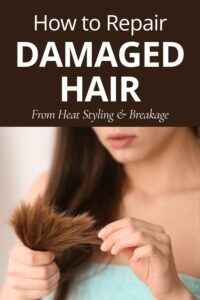
Heat styling tools can transform your hair in minutes, but that convenience can come with a cost. Flat irons, curling wands, and blow dryers expose strands to high temperatures that can gradually weaken the hair’s structure and contribute to moisture loss. Over time, hair may become drier, rougher, more brittle, and prone to split ends, frizz, and breakage. The damage often builds gradually, especially when hot tools are used frequently or at temperatures that are higher than your hair needs.
The good news is that damaged hair can still look and feel healthier with the right routine, even though existing structural damage can’t be completely reversed. Simple changes like lowering your styling temperature, using heat protectant, conditioning regularly, and handling fragile strands more gently can help prevent additional damage and improve manageability. If you’re trying to repair damaged hair from heat styling and breakage, these 12 practical tips can help you protect weakened strands while supporting healthier-looking hair as it grows.
Disclaimer: This article is for general informational purposes only and isn’t a substitute for professional advice. Results can vary depending on your hair type and the extent of existing damage. If you’re dealing with severe breakage, hair loss, or scalp concerns, consider consulting a licensed stylist or dermatologist.
1. Trim split ends regularly
Split ends can continue to fray farther up the hair shaft when left untrimmed, making the ends feel rougher and increasing the chance of additional breakage. Regular trims remove damaged ends before the splitting becomes more noticeable and help keep the overall length looking neater and healthier. How often you need a trim depends on your hair and routine, but every 8 to 12 weeks can be a useful starting point for some people.
Tip: Ask your stylist for a light “dusting” trim if you’re trying to maintain your length while removing damaged ends.
2. Use a heat protectant before every styling session
Heat styling can weaken the hair’s structure and contribute to moisture loss, especially when tools are used frequently or at high temperatures. A heat protectant creates a protective layer that can help reduce some of the damage caused by direct heat and make styling less harsh on fragile strands. Using one consistently is a simple protective step when you still want to use a blow dryer, flat iron, or curling tool.
Tip: Follow the product directions and distribute it evenly through the sections you’ll be styling, since formulas can differ in how they should be applied.
3. Lower your heat styling tool temperature
Using more heat than necessary can increase moisture loss and gradually damage the hair’s protective cuticle and internal structure. This can leave strands feeling rough, brittle, and more vulnerable to breakage, especially when the same sections are exposed to high temperatures repeatedly. Starting with a lower setting and increasing it only when necessary can help reduce unnecessary thermal stress.
Tip: Fine, fragile, bleached, or already damaged hair generally benefits from more conservative heat settings and fewer passes with the tool.
4. Choose a gentle, hydrating shampoo
Damaged hair can feel even rougher when it’s washed too aggressively or with a shampoo that leaves the lengths feeling stripped. A gentle, hydrating formula can cleanse the scalp while helping you avoid adding unnecessary dryness to already vulnerable strands. Sulfate-free shampoos may work well for some people, but the overall formula and how your hair responds matter more than avoiding one ingredient alone.
Tip: Look for shampoos designed for dry or damaged hair, including formulas with conditioning or moisture-supporting ingredients such as glycerin.
5. Deep condition regularly and use protein treatments when needed
Repeated heat exposure can damage the proteins and structure that help give hair its strength, leaving strands more vulnerable to dryness and breakage. Deep conditioners can improve softness, slip, and manageability, while protein-containing treatments may temporarily reinforce weakened areas of the hair shaft. How often you use either treatment should depend on your hair’s condition and the product directions rather than following a strict schedule.
Tip: If your hair starts feeling unusually stiff, rough, or brittle after protein treatments, reduce how often you use them and focus more on conditioning and moisture.
6. Try a bond-building treatment
Bond-building treatments are designed to support weakened or damaged hair structure, although the ingredients and technology can vary considerably between products. They can be particularly useful for hair that has been repeatedly exposed to heat, bleaching, coloring, or other chemical services. Depending on the formula, regular use as directed may help improve strength, reduce breakage, and make damaged strands feel more manageable.
Tip: Follow the directions for your specific product rather than using it more often than recommended, especially if you’re also using other intensive treatments.
7. Avoid repeatedly styling the same section
Passing a flat iron or curling tool over the same section several times can expose already fragile strands to unnecessary heat and increase the chance of further damage. Instead, work with smaller, manageable sections and try to achieve the style with as few passes as possible. Taking your time and using a consistent technique can help reduce repeated heat exposure while still giving you the finished look you want.
Tip: Make sure each section is properly detangled before styling so you don’t have to keep going over the same area.
8. Use a leave-in conditioner or hair oil
Leave-in conditioners and hair oils can help damaged strands feel softer, smoother, and easier to manage between wash days. Depending on the formula, these products can improve slip and reduce friction during everyday styling and detangling, which may help minimize unnecessary breakage. Applying them mainly to dry or rough areas can provide extra conditioning without making the roots feel unnecessarily heavy.
Tip: Start with a small amount on the mid-lengths and ends, adding more only if your hair needs it.
9. Cut back on how often you heat style
Frequent heat exposure can add new damage to strands that are already fragile, particularly when hot tools are used at high temperatures or repeatedly on the same areas. Cutting back on heat styling helps reduce cumulative thermal stress and gives you more opportunities to use gentler styling methods. There isn’t one ideal weekly limit for every hair type, so focus on reducing your current frequency whenever possible.
Tip: Try loose braids, buns, or other heatless styles between heat-styling sessions, but avoid pulling them tightly enough to create extra tension.
10. Switch to a silk or satin pillowcase
Hair naturally rubs against your pillow as you move during the night, and repeated friction can contribute to tangles, frizz, and breakage in already fragile strands. Silk and satin provide smoother surfaces that allow the hair to glide more easily instead of catching as much against the fabric. A pillowcase won’t repair existing damage, but reducing overnight friction can be another useful way to handle weakened hair more gently.
Tip: Wash your pillowcase regularly, especially if you apply leave-in products or hair oils before bed.
11. Detangle wet hair gently
Wet hair can be more vulnerable to stretching and breakage, particularly when the strands are already weakened by repeated heat exposure. Detangling slowly with enough slip can reduce unnecessary pulling, while a wide-tooth comb works well for many hair types. Some people with curly or coily hair may instead prefer a detangling brush specifically designed for use on wet, conditioned hair.
Tip: Start detangling from the ends and gradually work your way toward the roots instead of pulling through tangles from the top.
12. Dry your hair gently after washing
Rough towel drying can create additional friction on wet strands that are already fragile from heat styling and existing breakage. Rubbing, twisting, or pulling the hair aggressively may contribute to tangles, frizz, and unnecessary stress along the hair shaft. Gently squeezing out excess water and blotting with a soft microfiber towel or smooth cotton T-shirt is a gentler alternative.
Tip: Avoid twisting fragile, soaking-wet hair tightly into a heavy towel turban, especially if your strands are already prone to breakage.
Identifying Different Types of Hair Damage
Not all hair damage looks or behaves the same way, so knowing what you’re dealing with can help you choose the right approach. Dryness often shows up as dullness and a rough texture, while breakage may appear as short, uneven strands throughout the hair. Split ends are usually easier to spot at the tips, where individual strands begin to fray or separate.
Moisture Treatments for Dry, Damaged Hair
Dry, damaged hair can benefit from conditioning treatments that improve softness, smoothness, and manageability. Moisturizing masks and deep conditioners can help reduce roughness and make fragile strands easier to detangle and style. While these treatments can’t permanently reverse structural damage, they can help your hair feel softer and more manageable between trims.
What Not to Do When Your Hair Is Damaged
Sometimes caring for damaged hair is just as much about what you stop doing as what you add to your routine. Frequent high-heat styling, tight hairstyles, rough towel drying, and aggressive detangling can place additional stress on already fragile strands. Reducing unnecessary heat, friction, and tension can help prevent existing damage from becoming worse.
Choosing the Right Heat Protectant
Not every heat protectant feels or performs the same way across different hair types. Fine hair may prefer a lightweight spray that doesn’t weigh strands down, while thicker or curly hair may work well with richer creams or serums. If your hair is color-treated or already damaged, look for a formula suited to those needs and always follow the product’s application directions.
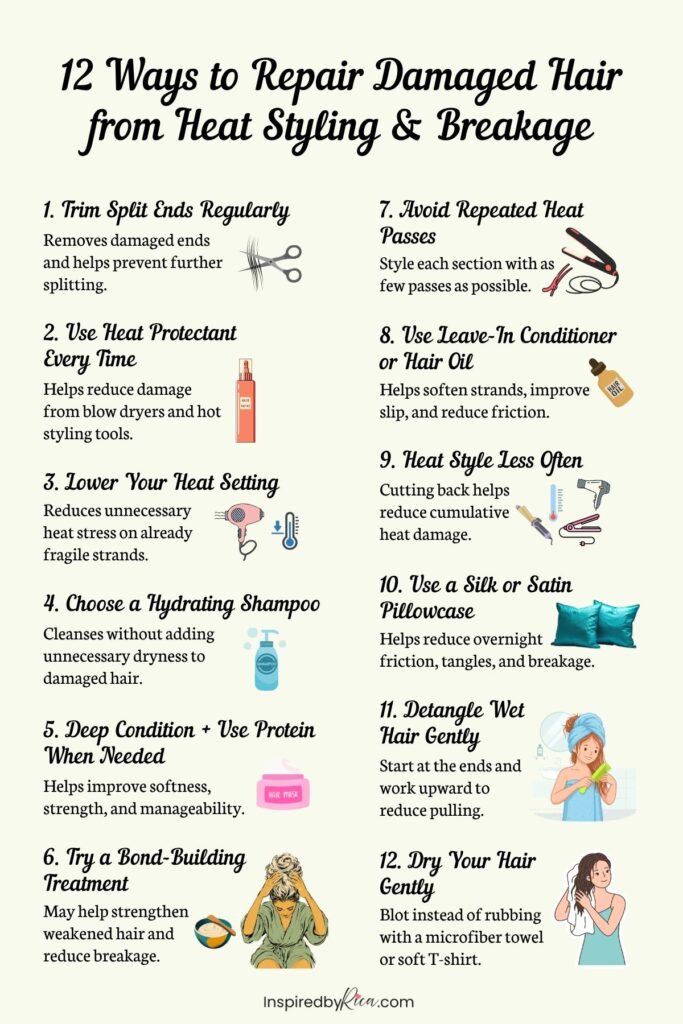
Visual Guide: 12 Ways to Repair Damaged Hair from Heat Styling and Breakage
Frequently Asked Questions (FAQ)
How long does it take to repair heat-damaged hair?
Hair may start to feel softer and more manageable with consistent care, but results vary. Long-term improvement depends on preventing further damage while healthier hair grows.
Can heat-damaged hair be fully reversed?
Not completely, since damaged hair strands can’t regenerate. Treatments can improve how hair looks and feels, while trims gradually remove the most damaged areas.
How often should I deep condition damaged hair?
Once a week can be a good starting point, but it depends on your hair and the product. Adjust the frequency based on how your hair responds.
Is it okay to still use heat tools on damaged hair?
Yes, but using them less often can help prevent further damage. Apply heat protectant and use the lowest effective temperature when styling.
What’s the difference between dryness, breakage, and split ends?
Dryness makes hair feel rough or dull, while breakage creates shorter, uneven strands. Split ends appear when the tips of the hair begin to fray or separate.
You May Also Like
Haircare Routine for Oily vs Dry Scalp (Men & Women Guide)
10 Things to Check Before Buying Shampoo and Conditioner
7 Simple Tips for Shiny and Healthy Hair
Takeaway: 12 Ways to Repair Damaged Hair from Heat Styling and Breakage
Caring for heat-damaged hair isn’t about finding a single miracle product; it’s about consistency. Lowering your styling temperature, using a heat protectant, cutting back on hot tools, and handling fragile strands more gently can all help reduce further damage and breakage. These changes don’t need to happen all at once, and small adjustments to your everyday haircare routine can make a noticeable difference over time. The goal is to protect the hair you have now while creating healthier styling habits you can maintain moving forward.
At the same time, existing hair damage can’t be completely reversed because damaged strands don’t regenerate once their structure has been compromised. That’s why regular trims, conditioning or strengthening treatments, and gentle handling matter just as much as prevention. Combining these habits can help your hair look and feel healthier and more manageable while healthier new growth gradually replaces the most damaged lengths. If you found this guide helpful, bookmark it so you can come back to these tips later, or share it with someone who may find it useful too.
Author’s Note:
I have a background in cosmetology and share practical, experience-based beauty and skincare tips. This content is not medical advice—please consult a licensed professional for specific concerns.