
Dealing with greasy roots, uncomfortable dryness, flakes, or a scalp that never seems to feel balanced can make building the right haircare routine for oily vs dry scalp surprisingly confusing. Products that work well for one scalp type can sometimes make the other feel worse, which is why understanding your scalp’s needs matters just as much as knowing your hair type. Once you know whether excess oil, dryness, or a combination of both is the main concern, creating a routine becomes much easier.
In this guide, you’ll learn how to recognize the signs of an oily vs dry scalp, build a simple routine for each, manage oily roots with dry ends, and know when persistent scalp concerns may need professional attention. The tips are suitable for both men and women and can be adjusted based on your hair length, texture, treatments, and everyday styling habits.
Disclaimer: This article is for general informational purposes only and is not a substitute for professional medical advice. If you have persistent or severe scalp symptoms or hair loss, consult a dermatologist or another licensed healthcare professional.
How to Tell If You Have an Oily or Dry Scalp
Before jumping into a routine, it helps to know what you’re actually dealing with. Your scalp type affects everything from how often you should wash your hair to which products will actually work for you. The good news is both oily and dry scalps tend to show pretty clear signs, so figuring out where you stand usually doesn’t take much guesswork.
Common signs of an oily scalp:
- Greasy roots soon after washing
- Product buildup
- Limp or flat looking hair
- Frequent urge to shampoo
Common signs of a dry scalp:
- Tightness
- Dryness
- Small flakes
- Rough feeling scalp
- Irritation
Keep in mind it’s possible to have a bit of both. That’s actually a common mix, and we’ll get into it later in this article. Once you’ve got a sense of your scalp type, you’re ready to move on to the routine that fits you best.
Haircare Routine for an Oily Scalp
1. Wash Your Hair Regularly
Skipping washes in an attempt to “train” an oily scalp may simply leave your roots feeling greasier between washes. Instead, wash your hair based on how quickly oil builds up, whether that’s daily, every other day, or less often depending on your scalp and hair needs.
Tip: Adjust your wash schedule based on how quickly your roots become greasy.
2. Choose a Lightweight Shampoo
Heavy, cream-based, or ultra-moisturizing shampoos can weigh oily hair down fast. Look for lightweight or clarifying formulas that clean thoroughly without leaving residue behind.
Tip: Look for formulas labeled lightweight, balancing, or designed for oily hair.
3. Focus Shampoo on the Scalp
Your scalp is where oil actually builds up, so that’s where the shampoo should go. Work it into your roots with your fingertips, then let the suds rinse down through the rest of your hair as you wash.
Tip: Massage shampoo gently with your fingertips rather than scratching with your nails.
4. Rinse Your Hair Thoroughly
Leftover shampoo or conditioner residue can contribute to buildup and make your scalp feel greasy faster. Rinse until the water runs completely clear, not just until the suds disappear.
Tip: Spend a little extra time rinsing around the crown, hairline, and behind the ears.
5. Apply Conditioner Mainly to the Lengths and Ends
Conditioner is meant for the parts of your hair that need moisture, and for oily scalps, that’s rarely the roots. Keep conditioner focused on the mid-lengths and ends so you’re not adding extra oil where you don’t need it.
Tip: Start conditioner around the mid-lengths and work it toward the ends.
6. Avoid Heavy Oils on the Scalp
Rich oils and butters can feel great on dry ends, but on an oily scalp they tend to make things worse. If you want to use oils on your lengths, keep them away from your roots.
Tip: If using hair oil, apply a small amount to your ends instead of your roots.
7. Limit Product Buildup
Heavy styling products, dry shampoo overuse, and rich leave-ins can all build up at the scalp over time. Every so often, a clarifying wash can help reset things and clear out anything that’s accumulated.
Tip: Use clarifying shampoo occasionally rather than adding it to every wash.
8. Clean Your Hairbrush and Styling Tools Regularly
Brushes and combs collect oil, product, and dead skin cells, and running them through freshly washed hair can undo some of your progress. A quick clean once a week or so keeps your tools from adding oil right back in.
Tip: Remove trapped hair first, then clean away visible oil and product residue.
9. Avoid Constantly Touching Your Hair
Your hands carry natural oils, and running them through your hair throughout the day transfers that oil straight to your scalp and strands. Try to be mindful of how often you’re touching or playing with your hair.
Tip: Keep your hair loosely tied back if you tend to touch it throughout the day.
10. Use Dry Shampoo Strategically, Not as a Replacement for Washing
Dry shampoo is a helpful tool for extending time between washes, but it’s not a substitute for actually cleansing your scalp. Use it in moderation, and don’t let it replace regular washing altogether.
Tip: Apply only where needed instead of coating your entire scalp.
Haircare Routine for a Dry Scalp
1. Use a Gentle, Moisturizing Shampoo
Harsh, sulfate-heavy shampoos can strip away the natural oils your scalp needs, making dryness worse. Look for gentle, hydrating formulas that clean without leaving your scalp feeling tight afterward.
Tip: Choose a formula that leaves your scalp comfortable rather than tight after washing.
2. Avoid Overwashing Your Hair
Washing too frequently can strip your scalp of the oils it needs to stay balanced. Spacing out washes may help if frequent shampooing leaves your scalp feeling dry, tight, or uncomfortable.
Tip: Let how your scalp feels after washing guide how often you shampoo.
3. Wash With Lukewarm Instead of Very Hot Water
Hot water feels nice, but it can dry out your scalp and strip away natural moisture. Lukewarm water is gentler and helps keep your scalp’s barrier intact.
Tip: Keep the water comfortably warm rather than steaming hot.
4. Use a Hydrating Conditioner
A moisturizing conditioner helps replenish the moisture your scalp and hair are missing. Look for formulas with hydrating ingredients, and don’t be afraid to apply a little closer to the roots if your scalp needs it.
Tip: Give your conditioner a few minutes to work before rinsing it out.
5. Treat the Scalp Gently While Washing
Aggressive scrubbing can irritate an already sensitive dry scalp. Use light, circular motions with your fingertips instead of nails, and avoid scrubbing too hard.
Tip: Use the pads of your fingertips and light pressure when massaging your scalp.
6. Be Careful With Harsh Styling Products
Some styling products contain alcohol or other drying ingredients that can worsen scalp dryness over time. Check labels and opt for gentler, scalp-friendly formulas when you can.
Tip: Stop using products that consistently leave your scalp feeling tight or irritated.
7. Reduce Excessive Heat Styling
Heat tools can pull moisture from both your hair and your scalp, especially with frequent use. Lowering the heat setting or cutting back on how often you style can help prevent added dryness.
Tip: Use a lower heat setting and avoid holding hot tools close to your scalp.
8. Protect Your Scalp From Drying Conditions
Cold weather, indoor heating, and sun exposure can all contribute to a drier scalp. A hat or scarf during harsh weather can offer some extra protection.
Tip: Choose loose, breathable head coverings that don’t rub or irritate your scalp.
9. Choose Scalp-Friendly Moisturizing Products
Scalp serums, oils, and treatments designed for hydration can help restore moisture where you need it most. Look for lightweight formulas that absorb well rather than sitting heavily on the scalp.
Tip: Start with a small amount so you can add moisture without creating heavy buildup.
10. Pay Attention to Persistent Flaking or Irritation
Occasional dryness is normal, but flaking or irritation that doesn’t improve with a gentler routine may be a sign of something more, which we’ll cover further down in this article.
Tip: Keep track of symptoms that persist or worsen so you know when to seek professional advice.
Oily vs Dry Scalp: Quick Haircare Comparison
| Oily Scalp | Dry Scalp |
| Wash as needed to control oil | Avoid unnecessary overwashing |
| Lightweight shampoo | Gentle, moisturizing shampoo |
| Conditioner mainly on lengths | Hydrating conditioner |
| Minimize heavy scalp products | Prioritize gentle hydration |
| Manage buildup | Minimize dryness and irritation |
Can You Have an Oily Scalp and Dry Hair?
It’s more common than people think, and it usually catches people off guard. You can have an oily scalp that gets greasy within a day or two, while your mid-lengths and ends stay dry, brittle, or prone to frizz. This tends to happen with longer hair, chemically treated hair, textured hair, or hair that gets regular heat styling, since the ends are simply older and more exposed to damage than the roots.
If this sounds like you, the fix isn’t picking one product for your whole head. Your shampoo can focus on cleansing the scalp, while your conditioner or a separate treatment focuses on hydrating your lengths and ends. Treating both concerns separately, rather than trying to find one product that does it all, usually gives better results.
Does the Routine Differ for Men and Women?
The core principles stay the same no matter who you are. Oil production, dryness, and irritation work the same way regardless of gender, so the basics of washing frequency and product choice apply across the board.
That said, hair length, texture, chemical treatments, styling habits, and heat use can all shift what a routine looks like in practice. Someone with short, low-maintenance hair may wash more often without much thought, while someone with longer, color-treated, or heavily styled hair may need to be more deliberate about balancing scalp needs with the needs of their lengths. It really comes down to your individual hair and scalp rather than anything tied to gender.
When Scalp Problems May Need Professional Advice
Not every scalp issue is simply “oily” or “dry,” and it’s important not to assume that it is. Persistent or severe itching, redness, pain, sores, thick scaling, sudden or patchy hair loss, or flaking that doesn’t improve despite a gentler routine can all be signs of something that needs more than a haircare adjustment.
If you’re dealing with any of these symptoms, it’s worth checking in with a dermatologist or another licensed professional rather than continuing to guess at home. They can properly diagnose what’s going on and recommend treatment suited to your specific situation.
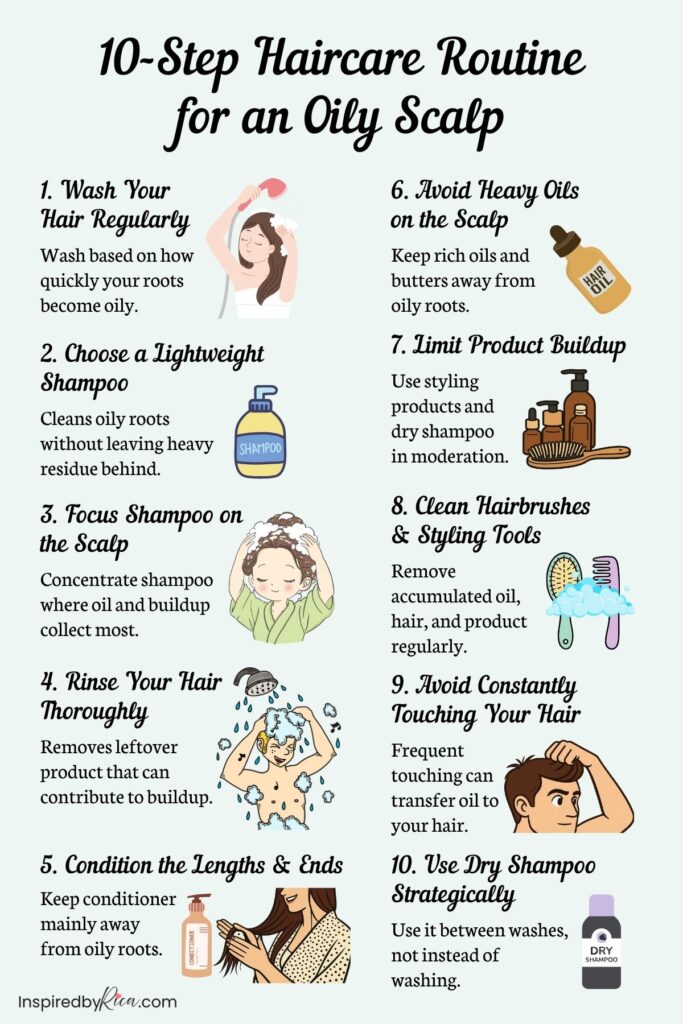
Visual Guide: Haircare Routine for an Oily Scalp
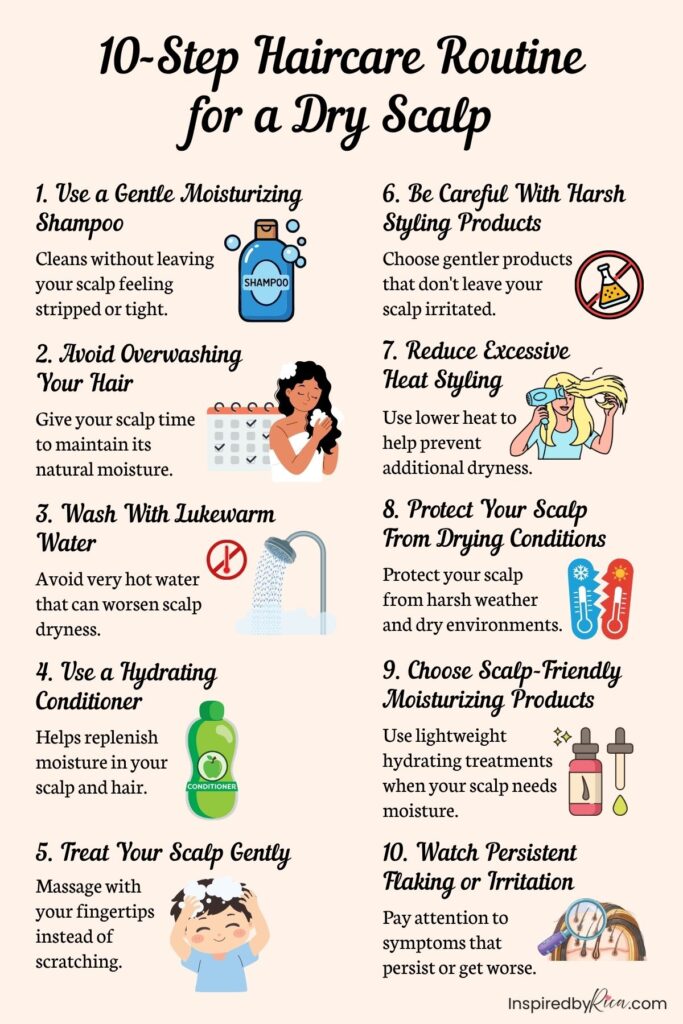
Visual Guide: Haircare Routine for a Dry Scalp
Frequently Asked Questions (FAQ)
How often should you wash your hair if you have an oily scalp?
Wash as often as needed to keep excess oil and buildup under control. For some people that’s daily or every other day, while others may need less frequent washing.
How often should you wash your hair if you have a dry scalp?
A dry scalp may benefit from less frequent washing, especially if shampooing leaves it feeling tight or uncomfortable. Try spacing out wash days and using a gentle, moisturizing shampoo to see how your scalp responds.
Can dandruff be mistaken for a dry scalp?
Yes, flaking doesn’t always mean your scalp is simply dry. If flakes come with persistent itching, redness, irritation, thick scaling, or don’t improve with a gentler routine, consider seeing a dermatologist for proper evaluation.
Can your scalp change from oily to dry or vice versa?
Your scalp’s needs can change over time due to factors such as weather, hair products, styling habits, and changes in your routine. Instead of sticking to the same products indefinitely, adjust your haircare routine based on how your scalp currently feels.
You May Also Like
7 Simple Tips for Shiny & Healthy Hair
10 Things to Check Before Buying Shampoo and Conditioner
12 Ways to Repair Damaged Hair from Heat Styling and Breakage
Takeaways: Haircare Routine for Oily vs Dry Scalp
Building the right scalp care routine starts with understanding what your scalp actually needs. Oily scalps generally benefit from regular cleansing, lightweight products, and buildup control, while dry scalps often need gentler washing, added hydration, and protection from habits that can worsen dryness or irritation.
Your routine doesn’t need to follow rigid rules. Pay attention to how your scalp and hair respond, make adjustments when needed, and treat oily roots and dry ends separately if necessary. Save or bookmark this guide for your next haircare reset, and share it with someone who may be trying to figure out their scalp type too.
Author’s Note:
I have a background in cosmetology and share practical, experience-based beauty and skincare tips. This content is not medical advice—please consult a licensed professional for specific concerns.