

Strong, healthy-looking nails don’t require a complicated routine or a drawer full of products. A consistent weekly nail care routine can help keep your nails clean, hydrated, neatly shaped, and less likely to snag or break during everyday activities. Setting aside a little time each week also gives you a chance to notice changes in your nails and cuticles before small concerns become harder to manage.
This simple 7-step routine covers everything from removing old polish and shaping your nails to caring for your cuticles and restoring moisture. Whether you regularly wear nail polish or prefer keeping your nails natural, these easy steps can become a practical part of your weekly self-care routine.
Disclaimer: This article is for general informational purposes only and is not a substitute for professional medical advice. If you notice persistent nail discoloration, pain, swelling, or unusual changes, consult a dermatologist or another licensed healthcare professional.
1. Remove old polish
Removing old nail polish gives you a clean starting point and makes it easier to check your nails for discoloration, ridges, weak spots, or other changes. It also creates a clean surface for any polish or treatments you choose to apply afterward. Starting fresh each week can help your next manicure look neater and more polished.
Tip: Use a non-acetone remover to avoid drying out your nails and surrounding skin.
2. Trim and shape nails
Trimming and shaping nails keeps them at a manageable length so they’re less prone to snagging, bending, or breaking during daily tasks. A clean, even shape also gives the rest of your routine a stronger base to work with, helping polish and treatments look neater and last longer. Regular trims also stop small cracks from turning into bigger breaks down the line.
Tip: Use a fine-grit nail file and gentle pressure, especially around the edges.
3. Soak nails
Soaking your nails in warm water softens the cuticles and makes them easier to work with in the next step. It can also make the surrounding skin and cuticles feel softer, which makes gentle cuticle care easier. A few minutes of soaking can even make trimming and buffing feel gentler on the nail bed.
Tip: Add a few drops of olive oil to your soak for extra hydration.
4. Push back and clean cuticles
Gently caring for the cuticle area can help keep the edges of your nails neat and remove visible buildup or loose skin. If you choose to push back your cuticles, soften them first and use very light pressure rather than forcing them back. Avoid cutting or aggressively removing healthy cuticle tissue, since it helps protect the area around the nail.
Tip: Use a wooden cuticle stick instead of metal tools to avoid damaging the nail bed.
5. Gently buff (optional)
Buffing your nails, if you choose to, smooths out ridges and gives the surface a soft, natural shine without needing polish. It also helps any treatments or polish you apply afterward glide on more evenly. Just keep it light and occasional, as over-buffing can thin out the nail and leave it more prone to damage.
Tip: Limit buffing to once every few weeks to avoid weakening the nail surface.
6. Apply cuticle oil and massage
Massaging cuticle oil into your nails nourishes the nail bed and locks in moisture that daily activities tend to strip away. Gently massaging the oil in helps spread it across the cuticles and surrounding skin while turning this step into a quick bit of hand care. It’s a small step, but one that makes a real difference in how your nails look and feel.
Tip: Massage for at least 30 seconds per hand to help the oil absorb fully.
7. Moisturize with hand cream
Finishing with hand cream seals in the moisture from your soak and cuticle oil, keeping nails and surrounding skin from drying out again. Well-hydrated skin around the nails also helps prevent hangnails and rough, cracked cuticles from forming. It’s a simple last step that ties the whole routine together, leaving hands feeling as good as your nails look.
Tip: Focus extra cream around the nail edges, where dryness shows up first.
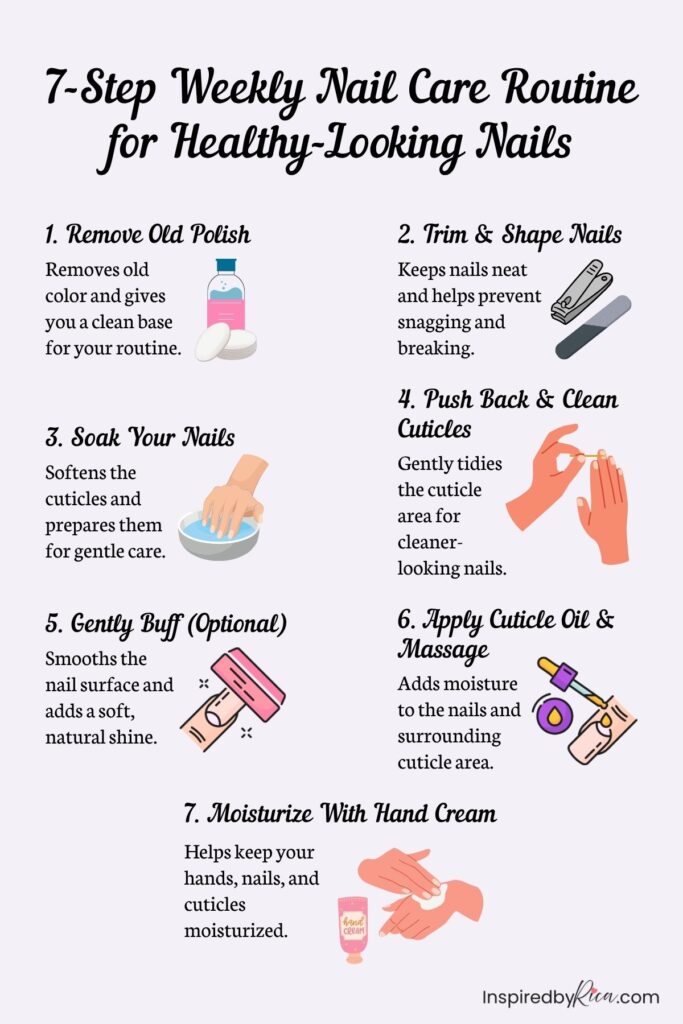
Visual Guide: 7-Step Weekly Nail Care Routine
Frequently Asked Questions (FAQ)
How often should you do a nail care routine?
A simple nail care routine can be done weekly, but some steps don’t need to be repeated every time. Adjust trimming, buffing, and cuticle care based on what your nails actually need.
Should you buff your nails every week?
No. Buffing too frequently or aggressively can thin the nail surface. Keep it gentle and occasional, especially if your nails are already thin or prone to breaking.
How can you keep your nails moisturized between weekly routines?
Apply hand cream regularly and use cuticle oil when your nails or surrounding skin feel dry. Consistent moisture can help keep the nail area and cuticles feeling soft and cared for.
What should you avoid when caring for your cuticles?
Avoid aggressive pushing, cutting, or picking around the cuticle area. Gentle care is better, and pain, swelling, redness, or persistent changes should be evaluated by a healthcare professional.
You May Also Like
9- Steps on How to Do a Salon-Quality Manicure at Home
10 Nail Care Mistakes That Weaken and Damage Your Nails
15 Best Skincare Ingredients for Clear, Healthy, and Glowing Skin
Takeaways: 7-Step Weekly Nail Care Routine for Strong, Healthy-Looking Nails
Healthy-looking nails often come down to consistent care rather than doing more. Following a simple nail care routine each week can help you maintain clean edges, hydrated cuticles, smoother nails, and a neat, well-cared-for appearance without making your routine complicated.
Be gentle with your nails, avoid over-buffing or aggressive cuticle care, and keep moisture a priority between weekly sessions. Save or bookmark this routine for your next at-home nail care day, and share it with someone who wants to give their nails a little more attention.
Author’s Note:
I have a background in cosmetology and share practical, experience-based beauty and skincare tips. This content is not medical advice—please consult a licensed professional for specific concerns.