
Great skin doesn’t come from having the longest routine or buying every new product that starts trending. What matters more is choosing skincare ingredients for glowing skin that suit your skin type and the concerns you actually want to address. Whether you’re dealing with breakouts, dryness, dullness, uneven texture, or fine lines, understanding what goes into your products can make it much easier to build a routine that works for you.
With so many ingredients and formulas available, figuring out what your skin really needs can quickly become confusing. This guide breaks down 15 popular skincare ingredients and explains what they do, which concerns they may help with, and simple ways to work them into your routine. From ingredients that support hydration and the skin barrier to antioxidants and exfoliants, these options can help you create a more thoughtful routine for clearer, healthier, and more radiant skin.
Disclaimer: This article is for informational purposes only and is not a substitute for medical or dermatological advice. Patch test new products and consult a dermatologist if you have sensitive skin, a skin condition, or concerns about using active ingredients.
1. Niacinamide
Niacinamide helps regulate oil production while calming redness and irritation. It strengthens the skin barrier over time, making skin more resilient to daily stressors. Regular use can visibly minimize the look of pores and even out skin tone.
Tip: Pair it with your moisturizer for an extra hydration boost.
2. Hyaluronic Acid
This ingredient can hold many times its weight in water, giving skin an instant plumping effect. It hydrates without feeling heavy, making it suitable for nearly every skin type. Well-hydrated skin naturally looks more radiant and bouncy.
Tip: Apply it on damp skin to lock in maximum moisture.
3. Vitamin C
Vitamin C is a powerful antioxidant that helps fight free radical damage from sun and pollution exposure. It supports collagen production, which can help skin maintain a firmer, more youthful appearance. Over time, it can help fade the appearance of dark spots and brighten the overall complexion.
Tip: Use it in the morning before sunscreen for added protection.
4. Retinol
Retinol speeds up skin cell turnover, helping reveal fresher skin underneath. It’s widely recognized for smoothing fine lines and improving overall texture. With consistent use, it can also help improve the appearance of post-acne marks and hyperpigmentation.
Tip: Start with a low concentration a few nights a week to avoid irritation.
5. Salicylic Acid
This oil-soluble acid penetrates deep into pores to clear out excess sebum and debris. It’s especially effective for breakout-prone and oily skin types. Its anti-inflammatory properties also help calm existing blemishes.
Tip: If your skin is sensitive, start with a lower-strength formula and use it less frequently.
6. Glycolic Acid
As an exfoliant, glycolic acid sloughs away dead skin cells to reveal a brighter surface. It helps improve rough texture and can reduce the appearance of fine lines. Consistent use often results in a more even, glowing complexion.
Tip: Always follow up with sunscreen since it increases sun sensitivity.
7. Ceramides
Ceramides are lipids naturally found in skin that help maintain its protective barrier. They lock in moisture and keep irritants and pollutants out. Skin with a healthy barrier tends to look plumper, smoother, and less reactive.
Tip: Look for ceramides in your nighttime moisturizer for barrier repair while you sleep.
8. Peptides
Peptides are short chains of amino acids that can help support the skin’s firmness and overall appearance. This support helps maintain skin’s firmness and elasticity over time. They’re gentle enough to combine with most other active ingredients.
Tip: Layer peptides under a rich moisturizer to help them absorb better.
9. Squalane
Squalane is a lightweight emollient that mimics skin’s natural oils, making it easy to absorb. It hydrates without clogging pores, making it friendly for oily and acne-prone skin too. Skin treated with squalane often feels softer and looks dewier.
Tip: A few drops can be mixed into foundation for a natural glow.
10. Centella Asiatica (Cica)
Known for its calming properties, this ingredient helps soothe redness and sensitivity. It supports skin healing, making it popular for those with compromised or reactive skin. Over time, it can improve overall skin resilience and comfort.
Tip: Great for post-treatment skin, like after exfoliation or sun exposure.
11. Azelaic Acid
Azelaic acid helps fade discoloration while also targeting acne-causing bacteria. It can be well tolerated by many skin types, including sensitive skin, although some people may experience mild irritation at first. This dual-action makes it ideal for uneven, blemish-prone skin.
Tip: It can be used both morning and night, making it easy to fit into most routines.
12. Vitamin E
This antioxidant works to protect skin cells from environmental damage. It also has moisturizing properties that help maintain skin softness. Often paired with Vitamin C, it boosts overall antioxidant protection.
Tip: Check the ingredient list of your moisturizer since Vitamin E is often already included.
13. Green Tea Extract
Rich in antioxidants called catechins, green tea extract helps calm inflammation and redness. It also provides some protection against environmental stressors like pollution. Skin often appears calmer and more balanced with regular use.
Tip: Look for green tea extract in soothing serums or moisturizers if redness is one of your concerns.
14. Zinc
Zinc helps regulate oil production and has anti-inflammatory properties beneficial for acne-prone skin. It also supports the skin’s natural healing process. Many people find it helps reduce the frequency of breakouts.
Tip: Zinc oxide in sunscreen offers gentle, broad-spectrum protection.
15. Panthenol (Pro-Vitamin B5)
Panthenol deeply hydrates while helping to reinforce the skin’s barrier. It has soothing properties that make it useful for irritated or sensitive skin. Skin often feels softer and more comfortable with consistent use.
Tip: It’s a great ingredient to look for after sun exposure or exfoliation.
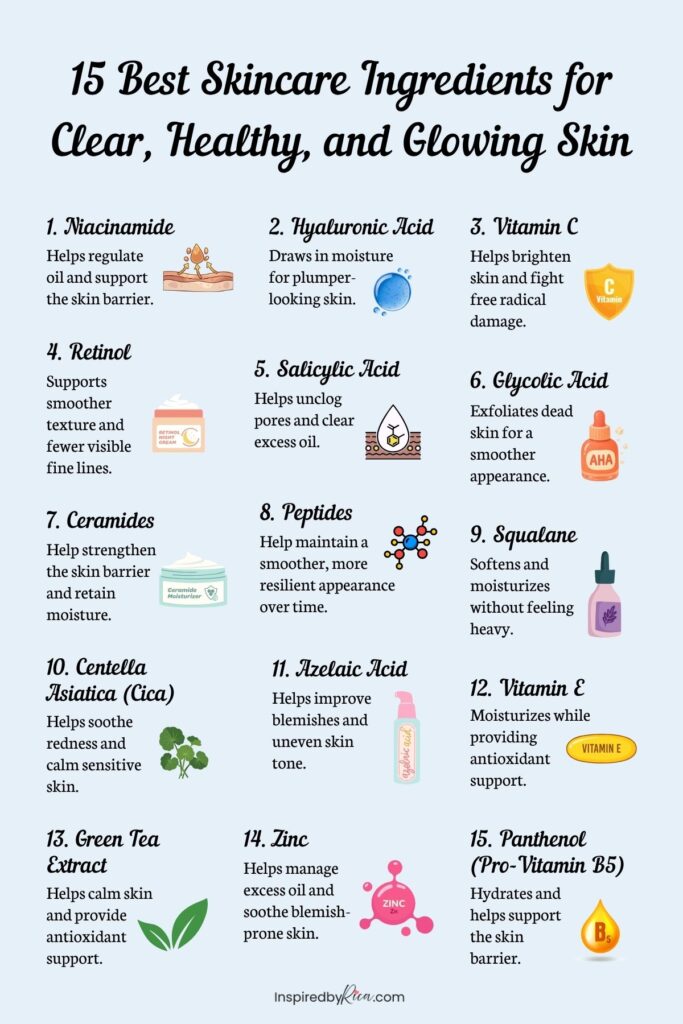
Visual Guide: 15 Best Skincare Ingredients for Clear, Healthy, and Glowing Skin
Frequently Asked Questions (FAQ)
Can I use all these ingredients together?
Not all at once. Some, like retinol and strong acids, can irritate the skin if layered together. It’s best to introduce new actives one at a time and space out stronger treatments across different days.
How long before I see results?
Most ingredients take at least 4 to 8 weeks of consistent use before visible changes appear. Skin cell turnover takes time, so patience and consistency matter more than quick fixes.
Are these ingredients safe for sensitive skin?
Many, like centella asiatica, panthenol, and ceramides, are gentle enough for sensitive skin. Stronger actives like retinol and glycolic acid should be introduced slowly and in lower concentrations.
Do I need all 15 ingredients in my routine?
No, you don’t need every ingredient. Focus on a few that target your specific skin concerns. A simple, consistent routine often works better than an overloaded one.
You May Also Like
10 Skincare Habits That Actually Improve Your Skin
12 Grooming Mistakes That Instantly Hurt Your Appearance
18 Must-Have Makeup Essentials Every Beginner Needs
7 Simple Tips for Shiny & Healthy Hair
Takeaway: 15 Best Skincare Ingredients for Clear, Healthy, and Glowing Skin
Healthy skin isn’t about using every popular ingredient at once. A better approach is choosing a few best skincare ingredients that match your skin type and specific concerns, then giving them enough time to work. Hydrating and barrier-supporting ingredients such as hyaluronic acid, squalane, ceramides, and panthenol can help keep skin comfortable and moisturized, while ingredients like vitamin C, retinol, and exfoliating acids can address more specific concerns when used appropriately.
As you build your routine, introduce new ingredients gradually and pay attention to how your skin responds instead of trying to change everything at once. Daily sunscreen is also an important part of protecting your skin and supporting the results of the rest of your routine. Save this guide so you can revisit it when you’re choosing skincare products or adjusting your routine, and share it with someone who might find it helpful too. You can always come back whenever you need a quick reminder of what each ingredient does.
Author’s Note:
I have a background in cosmetology and share practical, experience-based beauty and skincare tips. This content is not medical advice—please consult a licensed professional for specific concerns.