

Traveling with friends can create some of the best memories, but even a fun trip can get stressful when everyone has different budgets, schedules, travel styles, and ideas about what they want to do. A little planning before you leave can make a huge difference, especially when it comes to money, accommodations, activities, food, and how much time everyone expects to spend together. These tips for traveling with friends can help you avoid common disagreements and make the experience easier for everyone.
You don’t need to plan every minute or agree on absolutely everything to have a great trip together. What matters most is being open about expectations, communicating when something isn’t working, and giving each other enough flexibility and personal space along the way. Whether you’re traveling with longtime friends or taking your first group trip together, these 15 tips can help things run more smoothly from planning to the trip itself.
Disclaimer: This article is for general informational purposes only. Travel needs, costs, rules, and circumstances can vary, so always plan according to your destination and group.
1. Set a shared budget before booking anything
Money is one of the biggest sources of friction on group trips, and differences in spending comfort can turn a fun vacation into an awkward one fast. When everyone agrees on a budget range upfront, you avoid the discomfort of one friend wanting a five-star resort while another is counting pesos for jeepney fare. It also makes booking decisions faster since you’re not negotiating every choice from scratch.
Tip: Have an honest, judgment-free conversation about budget before anyone starts sending flight links.
2. Agree on a rough daily itinerary in advance
Without at least a loose plan, group trips can dissolve into wasted mornings debating what to do next, or worse, one person quietly steering the whole itinerary. Sketching out a rough daily flow ahead of time gives everyone a shared sense of direction while still leaving room for spontaneity. It also helps surface conflicting priorities early, before you’re standing in the lobby arguing about it.
Tip: Keep the itinerary loose enough to allow for detours, but clear enough that everyone knows the general plan for each day.
3. Choose accommodations with separate sleeping spaces if possible
Sharing one small room with several people for days on end can wear down even the closest friendships, especially once snoring, different sleep schedules, or the need for a little privacy comes into play. Having separate sleeping spaces, whether it’s individual rooms, a suite with multiple bedrooms, or at least separate beds, gives everyone a place to recharge without feeling crowded. It’s a small investment that can prevent a lot of unnecessary tension during the trip.
Tip: If separate rooms aren’t in the budget, at least try to get separate beds so everyone has their own space to unwind.
4. Split costs using an app like Splitwise
Keeping track of who paid for what during a trip can get messy fast, especially when expenses like meals, cabs, and tickets are constantly being fronted by different people. An app like Splitwise takes the awkwardness out of money talk by automatically calculating who owes whom, so no one has to keep mental tabs or bring up small debts days later. It keeps things transparent and fair, which helps the trip stay focused on fun instead of finances.
Tip: Log expenses as soon as they happen so nothing gets forgotten by the end of the trip.
5. Discuss non-negotiables and deal-breakers upfront
Every traveler has at least one thing they’re not willing to compromise on, whether it’s needing a certain amount of downtime, avoiding certain foods, or having a strict budget ceiling. Talking about these non-negotiables before the trip starts helps everyone set realistic expectations and avoid stepping on each other’s toes later. It’s much easier to plan around a deal breaker than to discover it in the middle of an argument on day three.
Tip: Ask each friend to share one thing they absolutely need or want to avoid, then build the trip around those answers.
6. Build in alone time for each person
Even the closest friends can get on each other’s nerves when they’re together nonstop for days without a break. Building in small pockets of alone time, whether it’s a solo coffee run, a nap, or just wandering a market by yourself, gives everyone a chance to recharge and come back to the group in a better mood. It’s not about avoiding each other, it’s about making sure everyone still has room to just be themselves during the trip.
Tip: Normalize saying “I need an hour to myself” so no one feels guilty about stepping away for a bit.
7. Assign roles based on strengths (planner, navigator, budgeter)
Group trips run a lot smoother when responsibilities are divided instead of left to chance or falling on one person by default. Giving each friend a role that matches what they’re naturally good at, like letting the detail oriented one handle the itinerary or the numbers person track the budget, means tasks actually get done well instead of everyone assuming someone else has it covered. It also spreads out the mental load so no single friend feels like they’re carrying the whole trip.
Tip: Rotate or check in on roles halfway through the trip so no one feels stuck doing all the planning or all the paying.
8. Communicate expectations about spending habits
Friends don’t always spend money the same way, and that gap can cause real tension when one person wants to splurge on every meal while another is trying to stick to a tight budget. Talking openly about spending habits before the trip helps set the tone for what activities, restaurants, or souvenirs the group can comfortably agree on together. It also makes it easier to plan optional add ons so no one feels pressured to spend beyond what they’re planned for.
Tip: Agree early on which expenses are shared and which ones are okay to opt out of if someone wants to save.
9. Plan a mix of group activities and optional solo excursions
Not every moment of a trip needs to be a group activity, and forcing everyone into the same itinerary the whole time can leave some friends feeling drained or like they’re missing out on what they personally wanted to do. Planning a mix of shared experiences and optional solo excursions lets the group bond over key activities while still giving individuals room to explore their own interests, whether that’s a museum one friend is excited about or a hike another wants to try alone. This balance keeps the trip enjoyable for everyone instead of just the loudest voice in the group.
Tip: Build a few “free blocks” into the schedule where people can choose to join the group or go do their own thing.
10. Agree on a wake-up time compromise
Early risers and night owls often end up traveling together, and mismatched sleep schedules can quietly cause frustration if one person is ready to go at sunrise while another wants to sleep in. Agreeing on a wake up time compromise means the group can still make the most of the day without anyone feeling rushed out of bed or stuck waiting around for others. It’s a small logistical detail, but it keeps mornings peaceful instead of becoming a recurring source of friction.
Tip: Pick a wake up time that feels reasonable for most of the group, then let early risers have quiet time to themselves before everyone else is up.
11. Talk about dietary restrictions and food preferences early
Food is a huge part of most trips, and not knowing about allergies, restrictions, or strong preferences ahead of time can lead to awkward moments at restaurants or someone constantly settling for whatever’s left on the menu. Talking about dietary needs early lets the group choose restaurants and activities everyone can actually enjoy, instead of scrambling to accommodate someone at the last minute. It also takes the pressure off the person with the restriction, since they won’t feel like they’re always the one holding up the group’s plans.
Tip: Share any allergies, restrictions, or must-try food goals in the group chat before the trip so restaurant picks are easier for everyone.
12. Create a group chat for real-time updates
Plans change constantly while traveling, whether it’s a delayed train, a change of restaurant, or someone falling behind at a shopping stop, and a group chat keeps everyone in the loop without needing to track people down individually. It becomes the easiest way to share updates, photos, and location pins in real time, so no one is left wondering where the group went or what the new plan is. It also cuts down on the stress of miscommunication, especially in unfamiliar places with spotty signal or language barriers.
Tip: Pin important info like the hotel address and daily meeting spots at the top of the chat so it’s easy to find.
13. Be flexible and willing to compromise
Even with the best planning, things won’t always go the way anyone expected, whether it’s a closed attraction, bad weather, or a friend who just isn’t feeling up for the original plan. Being flexible means the group can adjust without anyone feeling like the trip is falling apart, and compromise ensures no single person’s preferences dominate the whole itinerary. This kind of give and take is often what keeps the overall mood light, even when things don’t go exactly as planned.
Tip: When plans change, focus on finding a solution together instead of on whose fault it was.
14. Address conflicts immediately, not after the trip
Small annoyances have a way of piling up when they’re left unspoken, and letting them sit until after the trip usually means they come out bigger and messier than they needed to be. Addressing conflicts as they happen gives friends a chance to clear the air and keep enjoying the rest of the trip together, instead of carrying quiet resentment from one day to the next. It also shows respect for the friendship, since working through small issues in the moment is much easier than trying to unpack them weeks later.
Tip: Find a calm moment to talk it out privately rather than airing frustrations in front of the whole group.
15. Plan a debrief or check-in during the trip to reset expectations
Multi-day trips can drift from the original plan without anyone noticing, so a quick debrief partway through gives the group a chance to check in on how everyone’s actually feeling. It’s a low pressure way to catch small frustrations before they grow, adjust the pace if people are tired, or shift plans if something isn’t working for the group. Ending the trip on a good note often comes down to these small resets along the way rather than hoping everything stays fine on its own.
Tip: Keep the check-in casual, like over dinner or drinks, so it feels like a conversation and not a performance review.
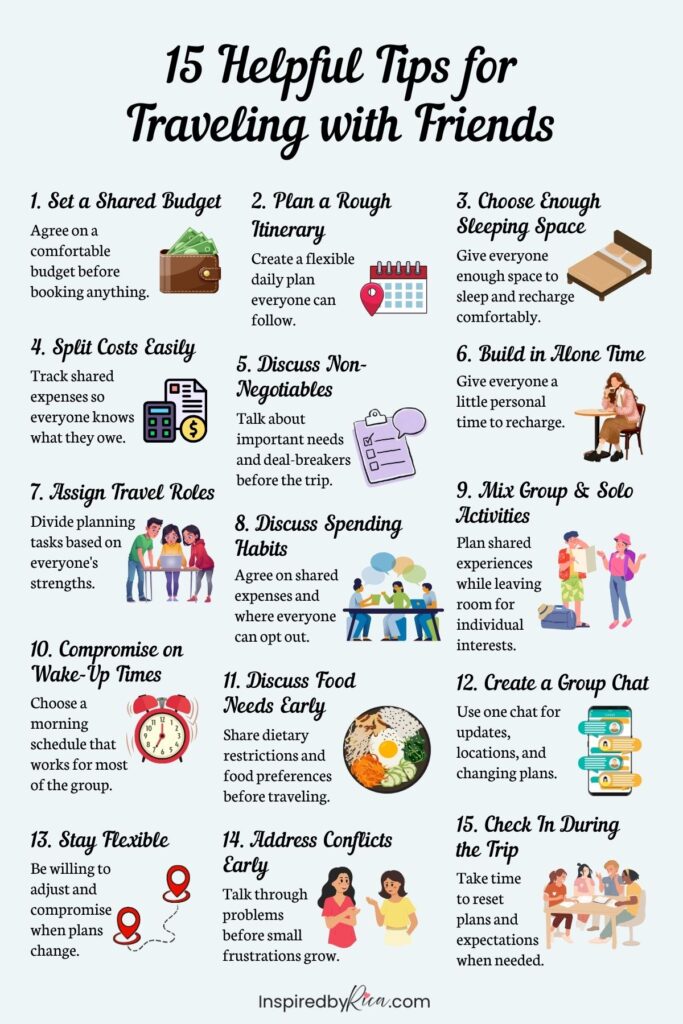
Visual Guide: 15 Helpful Tips for Traveling with Friends
You May Also Like
Complete Travel Checklist: 20 Things to Do Before Every Trip
25 Travel Money-Saving Tips for Flights, Hotels, and Travel Expenses
20 Inspirational Travel Quotes to Fuel Your Wanderlust
Takeaways: 15 Helpful Tips for Traveling with Friends
A successful trip with friends usually comes down to good planning, clear communication, and realistic expectations. Talking about budgets, accommodations, spending habits, food preferences, schedules, and personal non-negotiables before you leave can prevent many of the small problems that turn into bigger frustrations later. Having a flexible itinerary and sharing responsibilities can also make group travel feel more balanced instead of leaving one person to manage everything.
At the same time, remember that you don’t have to do everything together. Give each other space, be willing to compromise when plans change, and talk about problems before they build up. With the right balance of planning and flexibility, traveling with friends can be less stressful, more enjoyable, and full of memories you’ll actually want to look back on. Bookmark this guide for the next time you’re planning a trip with friends so you can revisit these tips before you go.