
Healthy nails start with taking care of the skin around them, yet cuticles are often one of the most overlooked parts of a nail care routine. It is easy to focus on polish, shape, or length while forgetting that the cuticle area also needs regular moisture and gentle care. Following a few simple cuticle care tips, such as moisturizing regularly and being careful with trimming or picking, can help keep the skin around your nails soft, comfortable, and healthy-looking.
This guide covers 10 practical ways to care for your cuticles, along with a few extra habits that can support your overall nail care routine. Whether you regularly deal with dryness and peeling or simply want to keep your nails neat and well maintained, small changes can make a difference over time. From choosing gentler tools and protecting your hands during cleaning to moisturizing consistently, these tips can help you build a simple routine that is realistic enough to maintain.
Disclaimer: This article is for informational purposes only and is not intended as medical advice. If you have persistent nail or skin issues, please consult a dermatologist or licensed healthcare provider.
1. Moisturize Cuticles Daily with Oil or Balm
Dry skin around the cuticles can become rough, cracked, or more prone to peeling and hangnails. Applying a moisturizing cuticle oil or balm regularly can help soften the area and reduce dryness. Oils such as jojoba or argan oil are easy to work into a nail care routine, while thicker balms can be useful when your cuticles need extra moisture. Applying your chosen product before bed also gives it plenty of time to sit on the skin overnight.
Tip: Keep a small bottle of cuticle oil at your desk or bedside so it is easy to make moisturizing part of your daily routine.
2. Avoid Cutting Your Cuticles at Home
The cuticle helps protect the area where the nail grows, so aggressively cutting or removing it can irritate the surrounding skin and increase the chance of small cuts. If you want a neater appearance, gently pushing back softened cuticles is a less aggressive option. Be careful not to force them back or scrape the nail surface, especially if the area is already sore, cracked, or irritated.
Tip: After a shower or hand soak, use a soft towel or your fingertip to gently tidy the cuticle area rather than cutting it yourself.
3. Choose Gentle Tools for Cuticle Care
When caring for your cuticles at home, gentle technique matters just as much as the tool you use. A wooden cuticle stick can be a simple option for carefully pushing back softened cuticles because it is lightweight and easy to control. Metal tools can also be used, but pressing too hard or scraping around the nail may irritate the skin or nail surface. Whatever tool you choose, keep it clean and avoid sharing it with other people.
Tip: If you use disposable wooden cuticle sticks, replace them regularly rather than continuing to reuse a worn or dirty one.
4. Reapply Moisture After Frequent Hand Washing
Frequent hand washing can leave the skin around your nails feeling dry, especially if you already have naturally dry hands. You do not necessarily need to apply cuticle oil after every wash, but reapplying moisturizer, hand cream, or cuticle oil throughout the day can help replace some of the moisture your skin loses. Pay extra attention to the cuticle area if you notice tightness, flaking, or rough skin.
Tip: Keep a travel-sized hand cream or cuticle oil in your bag for quick moisture whenever your hands start feeling dry.
5. Be Mindful of Drying Soaps and Hand Sanitizers
Frequent use of strong soaps, detergents, and other drying products can leave the skin around your nails feeling tight or irritated. When possible, choose a gentle hand cleanser that does not leave your skin excessively dry, and follow washing or sanitizing with moisturizer when needed. If you use hand sanitizer frequently, allowing it to dry completely before applying hand cream can help you maintain both hand hygiene and moisture.
Tip: If your hands feel dry after washing or sanitizing, apply a fragrance-free hand cream and gently work a small amount around your cuticles too.
6. Wear Gloves When Doing Dishes or Cleaning
Household chemicals and prolonged water exposure can be drying to the skin around your nails, sometimes leading to roughness or cracking. Rubber gloves create a barrier that shields your cuticles from these harsh conditions. Making this a habit protects not just your cuticles but the overall health of your hands.
Tip: Keep a pair of gloves by the sink so they’re always within reach when cleaning.
7. Exfoliate Cuticles Gently Once a Week
Dry, flaky skin can sometimes build up around the nails and make the cuticle area appear rough. If your skin tolerates exfoliation well, gently removing loose surface skin occasionally can help keep your hands feeling smoother. Avoid aggressive scrubbing or exfoliating areas that are cracked, sore, or irritated, since this may make sensitivity worse.
Tip: Keep exfoliation gentle and follow it with cuticle oil or hand cream to restore moisture.
8. Stay Hydrated to Support Nail and Skin Health
Staying adequately hydrated is part of supporting your overall health, including your skin, but drinking more water alone is unlikely to solve dry cuticles. For everyday cuticle dryness, topical moisture and protection from irritating products are usually more practical parts of your routine. Pair regular moisturizing with normal healthy hydration habits rather than relying on water intake as a quick fix for dry skin.
Tip: Drink according to your normal hydration needs while continuing to moisturize the skin around your nails regularly.
9. Choose Acetone-Free Nail Polish Remover
Nail polish remover can leave the nails and surrounding skin feeling dry, particularly when it is used frequently. Acetone works quickly but can be drying for some people, while certain acetone-free formulas may feel gentler depending on the ingredients. If you regularly remove polish, pay attention to how your nails and skin respond and choose a remover that works well for you.
Tip: Apply hand cream or cuticle oil after removing polish to help replenish moisture around the nails.
10. Get Regular Manicures from a Licensed Technician
A professional manicure can be helpful if you prefer having someone else maintain your nails and cuticles, but regular salon visits are not required for healthy nails. If you do get manicures, choose a reputable technician who follows appropriate hygiene practices and avoids aggressively cutting or damaging the cuticle area. Speak up if a technique feels painful or causes irritation.
Tip: Whether you maintain your nails at home or visit a salon, prioritize clean tools, gentle techniques, and proper hygiene.
Massage Cuticle Oil or Hand Cream Into Your Hands
Taking a minute to massage hand cream or cuticle oil into your hands can make moisturizing feel more thorough and help you cover the skin around each nail. Use gentle circular motions around the fingertips and cuticle area rather than pressing aggressively. It is an easy addition to your evening routine and can be especially useful when your hands feel dry after washing, cleaning, or spending time in dry weather.
Use Petroleum Jelly Overnight for Extra Moisture
Petroleum jelly creates a barrier that helps reduce moisture loss, making it useful when the skin around your nails feels particularly dry. Apply a small amount around your cuticles before bed, either on its own or after your usual moisturizer. You can also wear cotton gloves overnight if you prefer to keep the product from rubbing off. This simple step can be especially useful during colder or drier months when your hands need a little more moisture.
Avoid Biting or Picking at Cuticles
Biting or picking at cuticles can introduce bacteria into small open wounds, increasing the risk of painful infections. This habit can also cause long-term damage to the nail bed, sometimes affecting how nails grow. Breaking the habit often requires awareness and finding alternative ways to manage stress or anxiety that trigger the behavior. Keeping hands moisturized and nails neatly maintained can also reduce the urge to pick at rough or dry skin.
Support Nail Health with a Balanced Diet
A balanced diet provides the nutrients your body needs to support normal skin and nail growth. Rather than relying on one specific nutrient to strengthen your nails, focus on eating a varied diet that includes enough protein along with fruits, vegetables, whole grains, nuts, seeds, and other nutrient-rich foods. Biotin is one of several nutrients involved in normal body functions, but taking extra biotin is not automatically necessary for healthier nails.
Protect Hands from Cold, Dry Weather with Gloves
Cold weather and low humidity can quickly dry out the skin, making cuticles more prone to cracking and discomfort. Wearing gloves when outdoors creates a protective barrier against harsh winter air and wind. This is especially important for people who already struggle with dry skin or eczema, as extreme temperatures can worsen these conditions. Pairing glove use with regular moisturizing ensures cuticles stay protected both indoors and out.
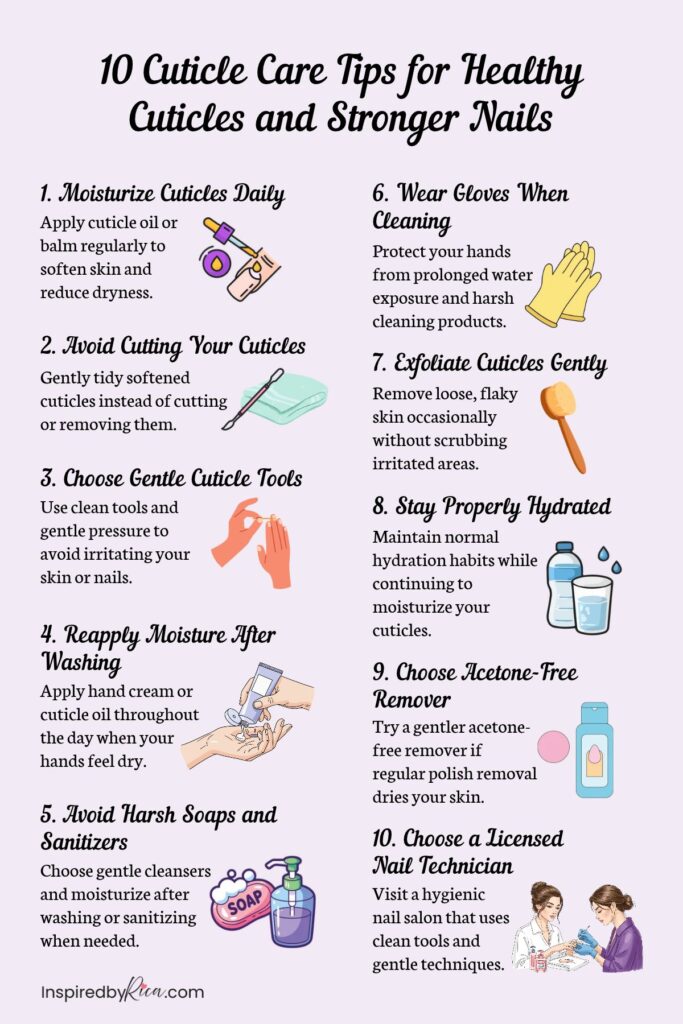
Visual Guide: 10 Cuticle Care Tips for Healthy Cuticles and Stronger Nails
Frequently Asked Questions (FAQ)
How long does it take to see results?
You may notice softer, better-moisturized cuticles fairly quickly with consistent care. Nail changes usually take longer because nails grow gradually.
Can I use regular lotion instead of cuticle oil?
Yes. Hand lotion or cream can help moisturize the skin around your nails. Cuticle oil is simply another convenient option for targeting the cuticle area.
Is it bad to cut my cuticles at home?
Cutting cuticles at home can cause small cuts and irritation. Gently pushing back softened cuticles is usually a less aggressive option for routine maintenance.
Why do my cuticles keep cracking even after moisturizing?
Frequent hand washing, cleaning products, dry weather, or picking can contribute to cracked cuticles. Moisturize regularly and protect your hands from common irritants.
Are cuticles supposed to be removed completely?
No. Cuticles help protect the area around the nail, so gentle maintenance is better than completely removing them.
You May Also Like
9- Steps on How to Do a Salon-Quality Manicure at Home
10 Nail Care Mistakes That Weaken and Damage Your Nails
7-Step Weekly Nail Care Routine for Strong, Healthy-Looking Nails
Takeaway: 10 Cuticle Care Tips for Healthy Cuticles and Stronger Nails
Taking care of the skin around your nails does not have to turn into another complicated beauty routine. Maintaining healthy cuticles often comes down to simple habits: moisturize regularly, use gentle tools, avoid picking or aggressive trimming, and protect your hands from excessive water, cleaning products, and dry weather. With consistency, these small habits can make keeping your cuticles comfortable and well maintained much easier.
Healthy-looking nails also benefit from regular moisturizing, good hygiene, gentle nail maintenance, and paying attention to how your skin responds. If you notice persistent pain, swelling, redness, or other changes around your nails, consider having the area checked by a qualified healthcare professional. Bookmark this guide so you can revisit these tips whenever your cuticles need a little extra care, and share it with someone who could use them too.
Author’s Note:
I have a background in cosmetology and share practical, experience-based beauty and skincare tips. This content is not medical advice—please consult a licensed professional for specific concerns.