
Strong, healthy nails do not happen by accident. Many cases of peeling, splitting, brittleness, and slow growth can be traced back to everyday habits that quietly weaken the nail structure over time. From improper filing techniques to skipping hydration, these common mistakes can prevent your nails from looking and feeling their best.
Understanding the most common nail care mistakes is one of the most effective ways to improve nail health and maintain stronger, healthier-looking nails. By identifying these habits and making a few simple adjustments, you can help protect your nails, support healthy growth, and reduce unnecessary breakage.
Disclaimer: This article is for informational purposes only and is not medical advice. Consult a qualified healthcare professional or dermatologist for concerns about your nail health.
1. Cutting Cuticles Instead of Pushing Them Back
Your cuticles exist for a reason. They act as a protective seal that keeps bacteria and moisture out of the nail bed. When you cut them, you break that barrier and open the door to infections and inflammation. Over time, this can disrupt healthy nail growth and leave nails looking uneven.
Tip: Use a wooden cuticle pusher after a warm soak to gently push them back instead.
2. Peeling Off Gel or Nail Polish
Peeling off gel or polish feels satisfying, but what you’re actually doing is ripping off the top layer of your natural nail along with it. This leaves nails thin, weak, and prone to splitting and breakage. Doing it repeatedly can permanently compromise nail strength.
Tip: Soak a cotton pad in the remover, press it onto the nail, and give it a few minutes to do the work.
3. Using Nails as Tools
Using your nails to open packages, pop lids, or scrape surfaces puts extreme pressure on them in ways they were never designed to handle. This causes stress fractures and breaks that weaken the nail structure from the tip down. Even if the nail doesn’t break immediately, the damage builds up silently.
Tip: Keep a small multi-tool or card opener in your bag so you never have to rely on your nails.
4. Skipping a Base Coat
A base coat is not just an optional first step. It creates a protective layer between your nail and the polish, preventing staining and bonding issues. Without it, pigments from colored polish seep directly into the nail, causing yellowing and dryness. It also gives your manicure something to grip so it actually lasts longer.
Tip: Even a thin layer of base coat makes a real difference in the health and look of your manicure.
5. Filing Nails Back and Forth
Sawing your file back and forth creates friction and heat that frays the nail edge and causes splitting at the tips. It weakens the nail from the inside out, making it much more likely to peel or break. The damage might not be visible right away, but it catches up with you quickly.
Tip: Always file in one direction, moving from the outer edge toward the center.
6. Overwashing Your Hands Without Moisturizing
Frequent handwashing strips away the natural oils that keep your nails and cuticles hydrated and flexible. Dry nails become brittle over time and start cracking or breaking with even light pressure. The skin around the nails suffers too, leading to painful hangnails and rough cuticles.
Tip: Apply a hand cream or cuticle oil right after washing and drying your hands every single time.
7. Ignoring Nail Hydration
Nails need moisture just like your skin does, and skipping that step leads to dullness, brittleness, and peeling. Dehydrated nails lose their flexibility, which makes them snap instead of bend under pressure. This is especially common during dry seasons or in air-conditioned environments.
Tip: Massage cuticle oil into your nails and cuticles every night before bed as part of your routine.
8. Biting Your Nails
Biting your nails damages the nail plate, weakens the nail bed, and introduces bacteria from your mouth into any small cuts or tears around the nail. It also changes the shape of how nails grow back over time, often leading to irregular or uneven growth. Beyond nail health, it creates an ongoing cycle that is genuinely hard to break without a conscious effort.
Tip: A bitter-tasting nail treatment applied daily can help interrupt the habit while your nails recover.
9. Using Harsh Acetone Too Often
Acetone is effective at removing polish, but it is also very drying and strips the nail of its natural moisture and oils with every use. Frequent exposure leaves nails chalky, brittle, and more vulnerable to breakage. The skin and cuticles around the nail are affected too, often becoming red, dry, and irritated.
Tip: Opt for an acetone-free remover for regular use and save the strong stuff for gel or glitter polish only.
10. Skipping Breaks Between Manicures
Going from one manicure to the next without giving your nails any breathing time prevents them from recovering their natural moisture balance. Nails that are constantly under polish and product become weak, discolored, and more prone to peeling over time. Even just a few days of bare nails between manicures can make a noticeable difference in how they look and feel.
Tip: Let your nails go bare for at least three to five days between manicures to reset and rehydrate.
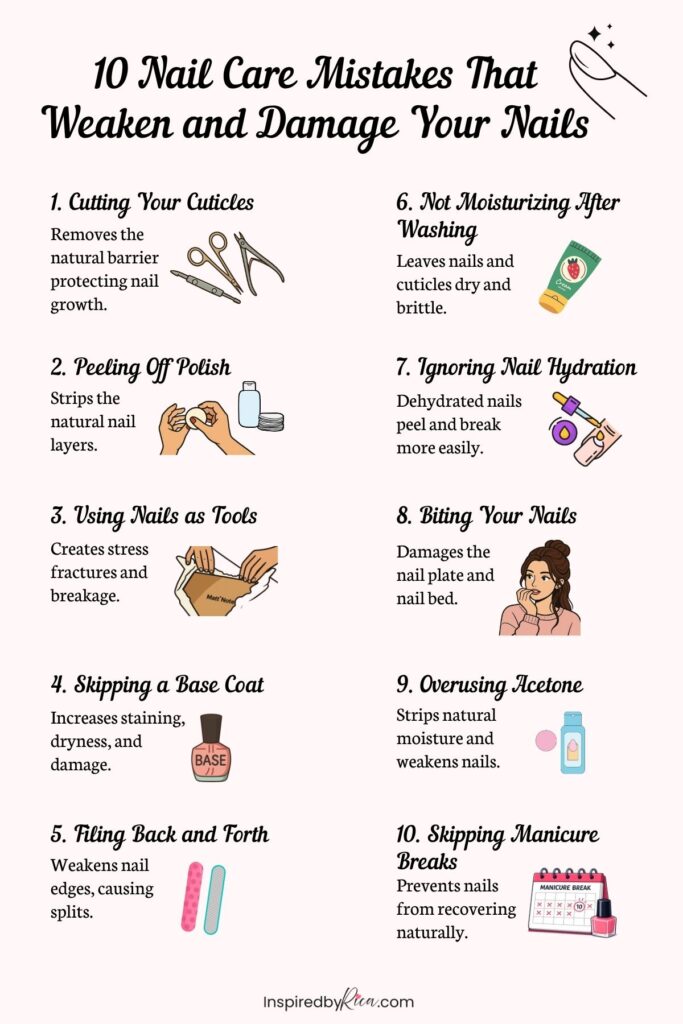
Visual Guide: 10 Nail Care Mistakes That Weaken and Damage Your Nails
Frequently Asked Questions (FAQ)
Why are my nails weak and brittle?
Weak nails are often caused by dehydration, excessive exposure to water, harsh nail products, nail biting, or frequent polish removal. Consistent nail care and hydration can help improve nail strength over time.
How can I make my nails stronger naturally?
Keeping your nails moisturized, applying cuticle oil regularly, avoiding nail damage, and eating a balanced diet rich in protein and nutrients can help support stronger nails.
Is it bad to wear nail polish all the time?
Wearing nail polish continuously without breaks may contribute to dryness and discoloration. Giving your nails occasional polish-free days can help maintain healthier-looking nails.
How often should I use cuticle oil?
Applying cuticle oil once or twice daily is generally recommended to help keep nails and cuticles hydrated, flexible, and less prone to cracking.
Does acetone damage your nails?
Frequent use of acetone can dry out nails and cuticles, which may lead to brittleness and breakage. Using it sparingly and following up with moisturizer can help reduce its drying effects.
You May Also Like
9- Steps on How to Do a Salon-Quality Manicure at Home
7-Step Weekly Nail Care Routine for Strong, Healthy-Looking Nails
10 Things to Check Before Buying Shampoo and Conditioner
Takeaways: 10 Nail Care Mistakes That Weaken and Damage Your Nails
Healthy nails depend on consistent care and protective habits. Many common nail problems, including breakage, peeling, dryness, and brittleness, are often linked to avoidable mistakes such as nail biting, overwashing, excessive acetone use, and neglecting moisture. Small changes in your routine can have a significant impact on the condition of your nails over time.
Building habits that support healthy nails, including proper hydration, gentle maintenance, and regular care, can help improve nail strength and appearance. Staying consistent with these practices gives your nails the best chance to grow stronger, smoother, and more resilient in the long run.
Author’s Note:
I have a background in cosmetology and share practical, experience-based beauty and skincare tips. This content is not medical advice—please consult a licensed professional for specific concerns.