

Getting stronger and staying disciplined doesn’t mean you have to completely change your lifestyle or spend hours working out every day. Real progress often comes from the small things you do consistently, from moving your body and eating well to getting enough rest and showing up even when motivation is low. Building daily fitness habits can make it easier to stay active, improve your strength, and create a routine that actually fits into everyday life.
The goal isn’t to follow every habit perfectly or change everything at once. It’s about finding simple routines you can stick with and building on them over time. These 17 fitness-focused daily habits cover movement, nutrition, recovery, sleep, and mindset to help you create a stronger and more balanced lifestyle. Start with a few that feel realistic for you, then slowly add more as they become part of your normal routine.
Disclaimer: This content is for general informational purposes only and is not a substitute for professional medical, fitness, or nutrition advice. Individual needs and abilities vary, so consider speaking with a qualified professional before making major changes to your exercise or nutrition routine.
Movement & Exercise
Movement is the foundation of any fitness-focused lifestyle, and it doesn’t have to mean hour-long gym sessions every day. These five habits build strength, consistency, and body awareness into your daily routine without requiring extreme effort. Small, repeatable actions compound into real physical change over time.
1. Move Your Body First Thing in the Morning
Starting your day with movement, even five minutes of stretching or a brisk walk, wakes up your muscles and signals your brain that the day has begun with intention. It also makes it far less likely you’ll skip activity altogether once life gets busy.
Tip: Lay out your workout clothes the night before so movement is the first decision you don’t have to make.
2. Prioritize Strength Training Over Cardio Alone
Building muscle boosts your metabolism, supports joint health, and improves how your body functions as you age, benefits that cardio alone doesn’t fully deliver. Two to three strength sessions a week is enough to see real change without overwhelming your schedule.
Tip: Start with bodyweight exercises like squats and push-ups if you’re new to strength training.
3. Take a 10-Minute Walk After Every Meal
A short walk after eating helps regulate blood sugar, supports digestion, and gives your mind a reset between tasks. It’s one of the easiest habits to stick with because it requires no equipment and barely any planning.
Tip: Pair it with a phone call or podcast so it feels like a break, not a chore.
4. Stretch or Mobilize Every Day
Daily stretching keeps your joints flexible and reduces the stiffness that builds up from sitting or repetitive movement. It also lowers your risk of injury during more intense workouts.
Tip: Focus on hips, hamstrings, and shoulders, the areas that tighten up fastest from daily habits.
5. Track Your Workouts
Writing down what you do, whether it’s reps, distance, or how you felt, helps you notice patterns and stay accountable to your own progress. Over time, it turns vague effort into visible results you can actually see.
Tip: Use a simple notes app or habit tracker instead of overcomplicating it with fancy fitness software.
Nutrition & Hydration
What you eat and drink shapes your energy, recovery, and how consistent you can stay with your fitness goals. These habits focus on simple, sustainable choices rather than restrictive rules or complicated meal plans. Getting the basics right here makes every other habit on this list easier to maintain.
6. Drink Water Before Coffee
After hours of sleep, your body wakes up mildly dehydrated, and reaching for coffee first can mask that instead of addressing it. A glass of water first thing helps kickstart digestion and gives you a clearer sense of your actual energy levels before caffeine takes over.
Tip: Keep a glass or bottle by your bed so it’s the first thing you see in the morning.
7. Eat Protein With Every Meal
Protein keeps you fuller for longer, supports muscle repair, and helps prevent the energy crashes that come from carb-heavy meals alone. Spreading it across breakfast, lunch, and dinner is more effective than loading up on protein just once a day.
Tip: Keep easy sources on hand, like eggs, Greek yogurt, or canned beans, for meals that come together fast.
8. Meal Prep on Your Slowest Day
Setting aside time on your least busy day to prep ingredients or full meals removes the daily decision fatigue that leads to skipped meals or impulsive choices. It also makes it easier to stick to your nutrition goals when the week gets hectic.
Tip: Start with just one prepped component, like chopped vegetables or cooked grains, instead of full meals if you’re short on time.
9. Limit Late-Night Snacking
Eating close to bedtime can disrupt digestion and sleep quality, both of which affect how recovered and energized you feel the next day. Building awareness around this habit is more about timing than cutting out snacks altogether.
Tip: Brush your teeth earlier in the evening, it naturally signals to your brain that the kitchen is closed.
Recovery & Sleep
Recovery is where your body actually adapts and grows stronger, not during the workout itself. These habits protect the rest side of the fitness equation, which is just as important as movement and nutrition but often gets overlooked. Without enough sleep and recovery, discipline in other areas starts to break down.
10. Get 7-9 Hours of Sleep
Sleep is when your muscles repair, your hormones regulate, and your brain consolidates the discipline you practiced all day. Consistently falling short on sleep makes it harder to stay motivated, control cravings, or perform well during workouts.
Tip: Keep a consistent bedtime, even on weekends, to help your body settle into a natural rhythm.
11. Create a Wind-Down Routine
A calming routine before bed, like dimming lights or putting your phone away, signals to your body that it’s time to shift out of go-mode. This makes it easier to fall asleep faster and reach deeper, more restorative sleep stages.
Tip: Try the same simple sequence every night, such as stretching then reading, so your body learns to recognize the cue.
12. Take Rest Days Seriously
Rest days aren’t a break from progress, they’re part of it, giving your muscles and nervous system time to recover from training stress. Skipping them too often can lead to burnout, injury, or a plateau in your results.
Tip: Use rest days for light activity like walking or gentle stretching instead of doing nothing at all.
Mindset & Discipline
Discipline isn’t about willpower alone, it’s about designing habits and mindsets that make consistency easier to sustain. These final habits focus on the mental side of fitness, the part that keeps you showing up even when motivation fades. Getting this right is often what separates short-term effort from long-term change.
13. Set Non-Negotiable Workout Times
Treating your workout time like an important appointment, rather than something you’ll get to if time allows, removes the daily debate over whether to show up. When it’s locked into your schedule, it becomes a habit instead of a decision.
Tip: Block the time on your calendar just like you would a work meeting.
14. Track Progress, Not Just Weight
The number on the scale doesn’t capture strength gains, better energy, improved sleep, or how your clothes fit differently. Tracking a fuller picture of progress keeps you motivated even during weeks when the scale doesn’t move.
Tip: Take progress photos or note how you feel monthly, not just daily weigh-ins.
15. Prepare Your Gym Bag the Night Before
Having your gear ready removes one more excuse standing between you and your workout, especially on busy or low-motivation mornings. It’s a small step that makes showing up feel automatic rather than effortful.
Tip: Keep a duplicate set of essentials, like socks and a towel, packed and ready at all times.
16. Avoid All-or-Nothing Thinking
Missing one workout or one healthy meal doesn’t erase your progress, but treating it like a failure often leads to giving up entirely. Consistency over time matters far more than perfection on any single day.
Tip: If you miss a day, focus on getting back on track at your very next opportunity, not “starting over” next week.
17. Celebrate Small Wins
Recognizing progress along the way, not just big milestones, keeps you motivated and reinforces the habits you’re trying to build. Discipline is easier to sustain when it feels rewarding, not just demanding.
Tip: Keep a running list of small wins, like a heavier lift or an extra rep, to look back on when motivation dips.
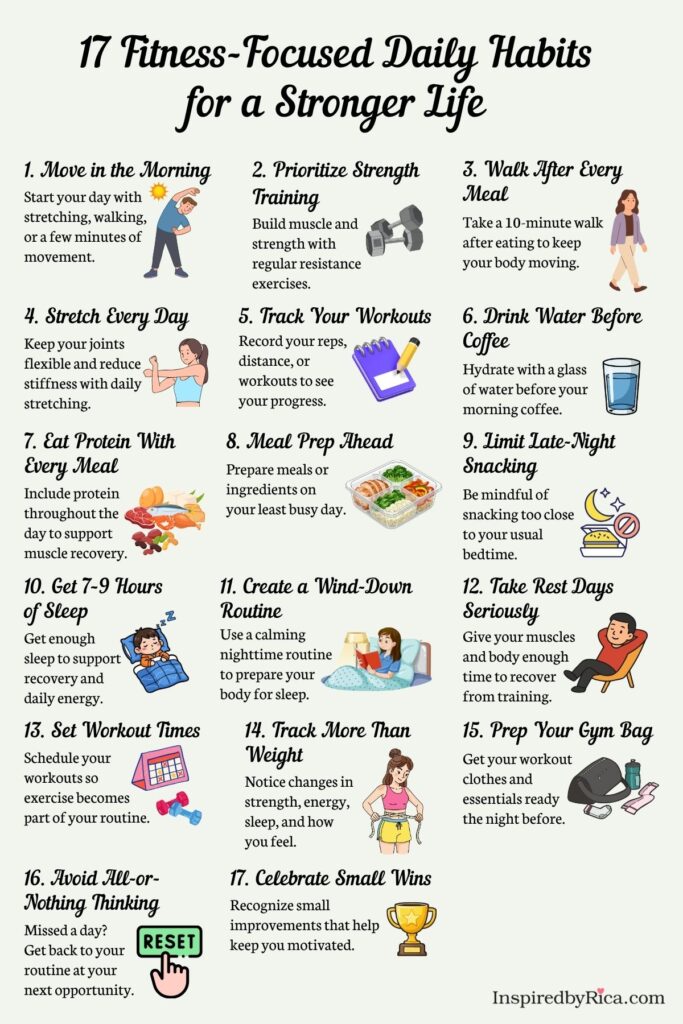
Visual Guide: 17 Fitness-Focused Daily Habits
You May Also Like
7 Simple Daily Habits for a Healthy Lifestyle
8 Common Habits That Can Slow Down Your Progress
20 Daily Wellness Habits That Improve How You Look and Feel
Takeaways: 17 Fitness-Focused Daily Habits for Stronger and More Disciplined Living
Building a stronger and more disciplined lifestyle doesn’t happen overnight. It comes from creating consistent fitness routines around movement, nutrition, recovery, and mindset that you can realistically maintain. You don’t need to do all 17 habits at once either. Start with a few that work for your lifestyle and build from there as they become easier to maintain.
Save or bookmark this list whenever you need a reminder of the simple habits that can keep you moving forward. You can also share it with a friend working toward similar goals and come back to it whenever your routine needs a little refresh.