

Struggling with dry patches, oily shine, or breakouts? A consistent daily skincare routine can make all the difference. No matter your skin type (oily, dry, combination, or sensitive), these five essential steps can help prevent breakouts, dryness, and early signs of aging. This guide provides a simple, effective daily skincare routine for both morning and evening, with tips tailored to each skin type to keep your skin radiant and healthy.
Disclaimer: This skincare guide is for educational purposes only. Always patch-test new products, and consult a licensed dermatologist if you have specific skin concerns, conditions, or allergies.
Step 1: Cleansing
Cleansing is the foundation of any skincare routine because it removes dirt, excess oil, makeup, and impurities that build up on your skin throughout the day. Proper cleansing helps prevent clogged pores, breakouts, and dullness while keeping your skin fresh and balanced. Starting with clean skin allows the rest of your skincare products to work more effectively.
- Oily skin: Foaming or gel cleansers to control shine.
- Dry skin: Creamy or hydrating cleansers to lock in moisture.
- Combination skin: Gentle cleansers that balance oily and dry areas.
- Sensitive skin: Mild, fragrance-free cleansers to avoid irritation.
Morning tip: Use lukewarm water to cleanse your skin gently without stripping away its natural oils.
Evening tip: Double cleanse if you’ve worn makeup or sunscreen to thoroughly remove buildup and impurities.
Step 2: Toning
Toning helps restore balance to your skin after cleansing and removes any remaining residue. It also prepares your skin to better absorb serums and moisturizers by lightly hydrating and refreshing the surface. Using a toner can improve overall skin texture and leave your skin feeling smoother and more refined.
- Oily skin: Salicylic acid toners may help minimize breakouts.
- Dry skin: Hydrating toners with glycerin or hyaluronic acid.
- Combination skin: Alcohol-free, gentle toners.
- Sensitive skin: Soothing toners with aloe vera or chamomile.
Morning tip: Prepares your skin to better absorb moisturizer and sunscreen for the day ahead.
Evening tip: Refreshes and calms your skin, helping it absorb serums or night creams more effectively.
Step 3: Serum or Treatment
Serums and treatments deliver concentrated active ingredients that target specific skin concerns such as uneven tone, dehydration, acne, or early signs of aging. Because they are lightweight and fast-absorbing, serums penetrate deeper into the skin and provide focused care. This step plays a key role in improving your skin’s appearance over time.
- Oily skin: Lightweight, oil-free serums with niacinamide or vitamin C.
- Dry skin: Hydrating serums with hyaluronic acid or ceramides.
- Combination skin: Balanced serums for hydration and oil control.
- Sensitive skin: Gentle serums with green tea or centella asiatica.
Morning tip: Antioxidant serums (like vitamin C) help brighten the skin and protect against environmental damage.
Evening tip: Use treatment serums that support overnight skin repair and renewal.
Step 4: Moisturizing
Moisturizing helps lock in hydration and strengthens your skin’s natural barrier. A good moisturizer keeps your skin soft, smooth, and protected from environmental stressors. Regular moisturizing supports healthy skin function and helps prevent dryness, irritation, and premature aging.
- Oily skin: Lightweight gel moisturizers.
- Dry skin: Rich creams or lotions for deep hydration.
- Combination skin: Apply lightweight moisturizers all over, add more where needed.
- Sensitive skin: Fragrance-free, hypoallergenic moisturizers.
Morning tip: Locks in hydration and creates a smooth base before applying sunscreen or makeup.
Evening tip: A nourishing night cream helps restore moisture and supports skin repair while you sleep.
Step 5: Sun Protection (Sunscreen – Morning Only)
Sun protection is essential for protecting your skin from UV damage, sunburn, and premature aging. Applying a broad-spectrum SPF 30+ sunscreen every morning helps shield your skin from harmful UVA and UVB rays that can weaken the skin barrier over time. Making sunscreen a consistent part of your daily routine supports healthier-looking skin and helps prevent long-term damage caused by sun exposure.
- Oily skin: Mattifying or gel-based sunscreens.
- Dry skin: Moisturizing SPF creams.
- Combination skin: Lightweight, non-greasy sunscreen (gel-based or fluid formulas work well to balance different areas).
- Sensitive skin: Mineral sunscreens with zinc oxide or titanium dioxide.
Evening note: Skip sunscreen at night and focus on hydration and skin recovery instead.
Extra Tips for Healthy Skin
- Exfoliate 1–2 times per week (choose gentle exfoliators if you have sensitive skin).
- Drink plenty of water and eat a balanced diet.
- Adjust seasonally: richer moisturizers in winter, lighter formulas in summer.
- Be consistent; results improve with regular practice.
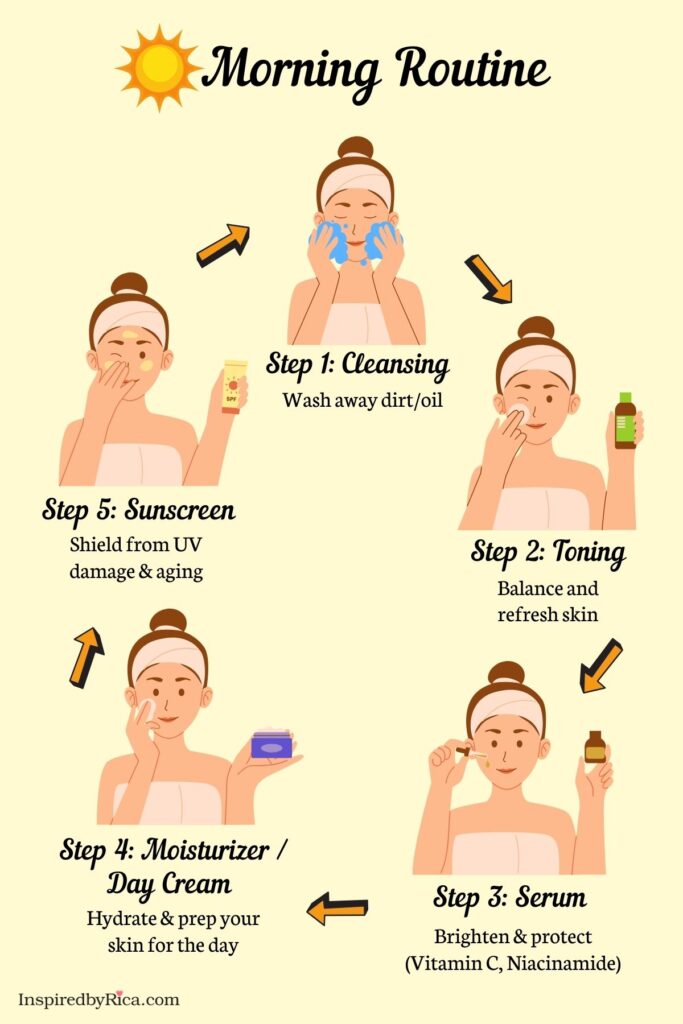
Visual Guide: Your Daily Morning Skincare Routine Made Simple
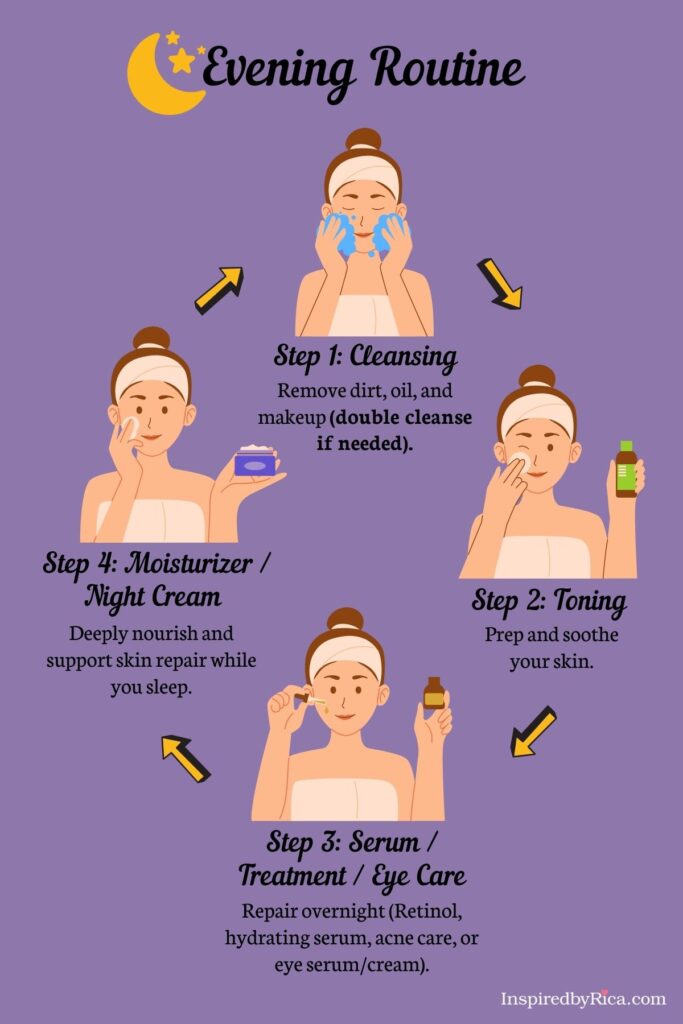
Visual Guide: Your Daily Evening Skincare Routine Made Simple
FAQ (Frequently Asked Questions)
What is the correct order of a daily skincare routine?
Cleanse, tone, apply serum, moisturize, and use sunscreen in the morning.
Can I skip toner in my routine?
Yes, but toner helps improve hydration and product absorption, especially for dry or sensitive skin.
Do I need a different routine for morning and night?
Yes. Morning focuses on protection (SPF), while nighttime focuses on repair and hydration.
You May Also Like
Skincare Routine for Dry Skin in Summer: 10 Ways to Prevent Dehydration
Skincare Routine for Oily Skin in Summer: 10 Ways to Control Shine
10 Skincare Habits That Actually Improve Your Skin
10 SPF Rules to Choose the Right Sunscreen (Men & Women Guide)
Takeaways: Daily Skincare Routine for Every Skin Type
A simple skincare routine doesn’t need to be complicated. In the morning, cleanse, tone, treat, moisturize, and protect with sunscreen. At night, skip SPF and focus on cleansing, hydration, and repair. Nighttime care is when your skin works hardest to renew itself. Remember, small daily habits make a big difference. Love your skin, and it will love you back! Feel free to revisit this article whenever you need a refresher on skincare tips, and share it with friends, family, or on social media so they can also learn the importance of a good skincare routine!
Author’s Note:
I have a background in cosmetology and enjoy sharing practical, experience-based beauty and skincare tips. This content is not medical advice—please consult a licensed professional for specific concerns.