
Choosing the right sunscreen isn’t just about grabbing any bottle with SPF on the label. From broad-spectrum coverage to the right formula for your skin type, small details make a big difference in how well you’re actually protected from sun damage. With so many options on the shelf, it’s easy to feel overwhelmed or just pick whatever’s convenient.
Whether you’re a woman balancing sunscreen with a full skincare and makeup routine, or a man looking for something simple and effective, these 10 rules will help you choose the right sunscreen that actually works for your lifestyle and skin. No matter your routine, a little know-how goes a long way in keeping your skin safe every day.
Disclaimer: This article is for informational purposes only and is not intended as medical advice. Consult a dermatologist for guidance tailored to your specific skin type or concerns.
1. Choose broad-spectrum protection (UVA + UVB coverage)
Broad-spectrum sunscreen protects against both UVA rays, which cause premature aging, and UVB rays, which cause sunburn. For women, this helps prevent dark spots and early aging, especially under daily makeup. For men, it offers reliable protection during everyday activities like work or sports.
Tip: Always check the label for “broad-spectrum,” or you’re only getting half the protection.
2. Pick SPF 30 minimum, SPF 50 for extended sun exposure
SPF 30 blocks about 97% of UVB rays, making it a solid baseline for daily protection, while SPF 50 offers extra coverage for longer days outdoors. For women, SPF 30 works well for everyday wear under makeup, while SPF 50 is better for beach days or long walks. For men, especially those with more outdoor exposure at work or during sports, SPF 50 helps reduce the risk of sunburn and long-term skin damage.
Tip: When in doubt, go higher, since more sun exposure always calls for stronger protection.
3. Check the water-resistance rating for swimming or sweating
Water-resistant sunscreen stays effective longer when you’re swimming or sweating, but it still wears off and needs reapplying, usually after 40 or 80 minutes depending on the label. For women, this matters for beach days or workouts where makeup and sunscreen can otherwise slide off together. For men, it’s especially useful during sports, gym sessions, or outdoor labor where sweat is constant.
Tip: Water-resistant doesn’t mean waterproof, so always reapply after swimming or heavy sweating.
4. Match the formula to your skin type (gel for oily, cream for dry)
The right sunscreen texture makes it more likely you’ll actually wear it every day, since a mismatched formula can feel greasy, sticky, or too heavy. For women, lightweight gel or fluid formulas work well under makeup for oily or combination skin, while creamier formulas suit dry skin for added hydration. For men, gel or matte formulas are often more comfortable for oilier skin types, especially in humid weather or after shaving.
Tip: If your sunscreen feels uncomfortable, you’re less likely to reapply it, so comfort matters as much as SPF strength.
5. Apply at least ¼ teaspoon for the face alone
Using too little sunscreen is one of the most common mistakes, since it can cut your actual protection level in half even if the bottle says SPF 50. For women, this means applying enough underneath makeup rather than just a light swipe, so the SPF actually works as labeled. For men, it’s easy to underapply during a quick morning routine, so measuring it out helps ensure real protection throughout the day.
Tip: A dollop about the size of a coin is a simple way to measure the right amount.
6. Reapply every two hours, or right after swimming/sweating
Sunscreen breaks down over time from sun exposure, sweat, and rubbing against clothes or towels, so a single morning application isn’t enough for full-day protection. For women, keeping a compact sunscreen stick or powder on hand makes reapplying over makeup quick and easy. For men, setting a reminder or reapplying during breaks at work or outdoor activities helps maintain protection without much hassle.
Tip: Set a phone reminder every two hours, since it’s easy to forget once you’re out and about.
7. Apply 15–30 minutes before sun exposure
Sunscreen needs time to properly bind to the skin before it can offer full protection, so applying it right as you step outside leaves you vulnerable in those first few minutes. For women, this means applying it before the rest of the makeup routine so it has time to settle instead of rushing out the door. For men, applying it right after showering or before heading out gives it enough time to work before sun exposure begins.
Tip: Apply sunscreen as part of your routine before you’re dressed and ready to leave, not as the last step out the door.
8. Avoid expired sunscreen (check the PAO/expiry symbol)
Expired sunscreen loses its active ingredients over time, which means it can’t actually provide the SPF protection printed on the bottle anymore. For women, this is worth checking on sunscreens tucked into makeup bags or drawers that don’t get used daily. For men, sunscreen often sits unused for months at a time, so checking the expiry date before summer or a trip is an easy habit to build.
Tip: Look for the small jar symbol with a number like 12M or 24M, which tells you how many months it’s good for once opened.
9. Layer sunscreen as the last step in skincare, before makeup
Applying sunscreen after your other skincare products, but before makeup, gives it a clean surface to bind to the skin properly. For women, this order helps sunscreen work as intended while still creating a smooth base for foundation or concealer. For men, sticking to this simple order, moisturizer first, sunscreen last, keeps the routine easy without extra steps.
Tip: Give your sunscreen a minute to settle before applying makeup on top.
10. Choose mineral (zinc oxide/titanium dioxide) for sensitive skin, chemical for daily wear
Mineral sunscreens sit on top of the skin and reflect UV rays, making them gentler for sensitive or reactive skin, while chemical sunscreens absorb into the skin and tend to feel lighter for everyday use. For women, mineral formulas are often a better fit for sensitive skin or use around the eyes, while chemical formulas blend more easily under makeup. For men, chemical sunscreens are usually preferred for daily wear since they’re lightweight and less likely to leave a white cast, especially on darker skin tones.
Tip: If your skin reacts easily to products, start with a mineral sunscreen first.
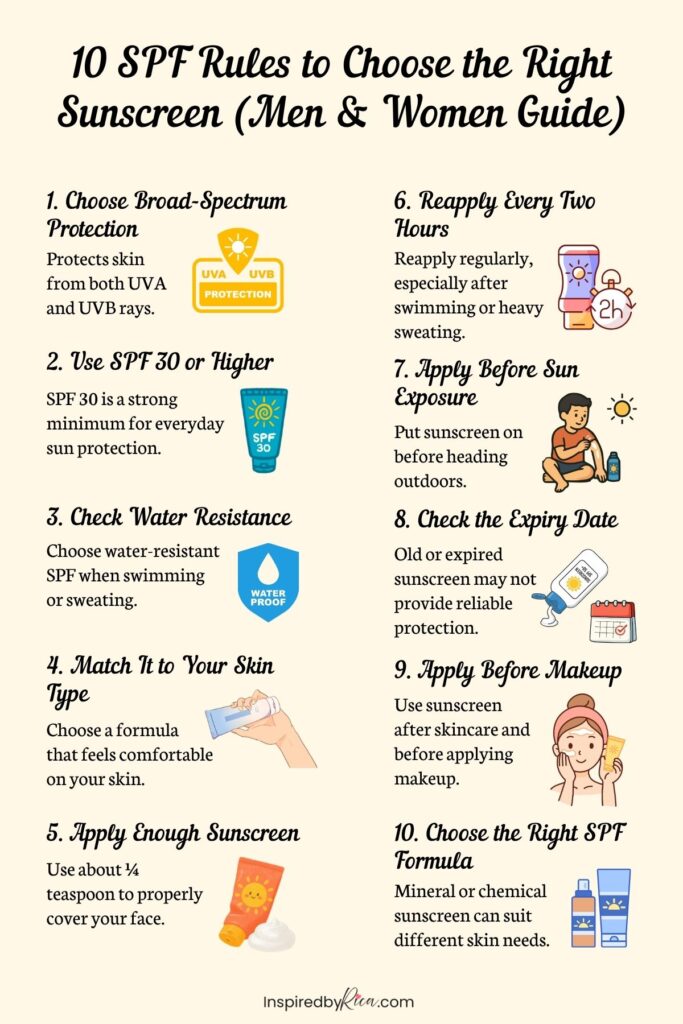
Visual Guide: 10 SPF Rules to Choose the Right Sunscreen (Men & Women Guide)
Frequently Asked Questions (FAQ)
Is SPF 30 or SPF 50 better?
SPF 30 is suitable for everyday use, while SPF 50 provides higher UVB protection and can be useful for longer sun exposure.
Can I use body sunscreen on my face?
Yes, but facial sunscreens are often lighter and may be more comfortable for your skin type or under makeup.
Do I need sunscreen on cloudy days?
Yes. UV rays can still reach your skin on cloudy or overcast days.
Should sunscreen go before or after moisturizer?
Apply sunscreen after moisturizer and before makeup as the final step of your morning skincare routine.
How often should I reapply sunscreen?
Reapply about every two hours when outdoors and after swimming, sweating, or towel drying.
You May Also Like
Daily Skincare Routine: 5 Essential Steps for Every Skin Type
10 Skincare Habits That Actually Improve Your Skin
Men’s Skincare Routine: 7 Steps for Clear, Healthy Skin
Takeaways: 10 SPF Rules to Choose the Right Sunscreen (Men & Women Guide)
Protecting your skin doesn’t have to be complicated. With the right SPF, formula, and application habits, you can enjoy the sun while keeping your skin healthy for years to come. Small, consistent choices now can save you from bigger skin concerns down the road.
Found this guide helpful? Bookmark it for the next time you’re shopping for sunscreen, and feel free to share it with your loved ones, friends, or anyone who could use a little help following these SPF rules. A little sun safety knowledge is always worth passing on.
Author’s Note:
I have a background in cosmetology and share practical, experience-based beauty and skincare tips. This content is not medical advice—please consult a licensed professional for specific concerns.