
Even the most expensive makeup products cannot compensate for techniques that unintentionally add years to your appearance. Many makeup mistakes that make you look older, from over-powdering and heavy contouring to choosing the wrong foundation shade, can emphasize fine lines, texture, and dullness rather than enhancing your natural features. Understanding these common mistakes is one of the easiest ways to create a fresher, smoother, and more flattering makeup look.
Whether you’re a beginner or a longtime makeup wearer, small adjustments can make a noticeable difference. These common makeup mistakes and simple fixes will help you achieve a more youthful-looking complexion, improve makeup longevity, and create a polished finish that looks natural in both everyday life and photos.
Disclaimer: This article is for informational and educational purposes only. Makeup results vary based on individual skin type, facial features, and product choices. Consult a qualified beauty or skincare professional for personalized advice.
1. Applying Too Much Powder
Excess powder settles into fine lines and creases, making wrinkles look more pronounced than they actually are. It also strips away your skin’s natural luminosity, leaving your complexion looking flat and dull. The fix is to use a light hand and dust powder only where you truly need it, like your T-zone.
Tip: A fluffy brush gives you more control than a puff so you never over-apply.
2. Using the Wrong Foundation Shade
A foundation that’s too light or too dark creates a visible contrast between your face and neck, which instantly reads as unnatural and aging. The wrong undertone can also make your skin look ashy, sallow, or washed out. Always match your foundation shade to your jawline in natural light before buying.
Tip: When in doubt, go one shade warmer since it tends to be more universally flattering.
3. Skipping Primer
Without primer, foundation has nothing to grip onto, so it slides, creases, and fades faster throughout the day. This uneven wear actually emphasizes texture and pores over time. A good hydrating or smoothing primer creates a seamless canvas and helps your whole look last longer.
Tip: Let your primer fully absorb for about 60 seconds before applying foundation on top.
4. Overdrawing Your Lips
Going too far outside your natural lip line, especially with dark or bold colors, can look harsh and exaggerate the fine lines around your mouth. As we age, lips naturally lose volume, and overdrawing in the wrong way only draws attention to that. Instead, line just at the edge of your natural lip and use a nude liner to subtly define and slightly plump.
Tip: A lip liner close to your natural lip color is the most forgiving and timeless option.
5. Wearing Heavy Contour
Chunky, overly defined contouring can look muddy and unnatural, especially in daylight or photos. Heavy shadows that aren’t blended properly emphasize hollows and accentuate instead of sculpt. A soft, diffused bronzer swept lightly through the temples and cheekbones gives a much more youthful, sun-kissed effect.
Tip: Use a fluffy brush and blend in circular motions to soften any harsh lines.
6. Using Matte Everything (No Glow)
A fully matte face can look flat, tired, and older because it absorbs light rather than reflecting it. Youthful skin naturally has a subtle radiance, and matte products strip that away. Adding a liquid highlighter mixed into your foundation or a dewy setting spray instantly brings life back to your complexion.
Tip: Focus your glow on the high points of your face, your cheekbones, brow bone, and the bridge of your nose.
7. Ignoring Your Brows
Sparse or ungroomed brows make the whole face look less defined and can age you significantly. Full, well-shaped brows naturally frame your eyes and lift your features. Use light, feathery strokes with a brow pencil or pomade to fill in gaps and follow your natural arch.
Tip: Resist over-plucking and let them grow in as much as possible before reshaping.
8. Applying Eyeliner on Your Waterline
Lining the inner lower waterline with a dark liner closes off the eye and makes it appear smaller and more tired. As we get older, eyes can already look more hooded or less open, and this technique only intensifies that. Instead, use a nude or white pencil on the waterline to open up and brighten your eyes.
Tip: Tight-lining the upper lash line gives definition without making your eyes look smaller.
9. Using Dark, Heavy Eyeshadow
Packing on dark eyeshadow all over the lid can drag your eyes downward and create a heavy, dated look. It emphasizes droopiness rather than lifting the eye area. Opt for softer, medium-toned shades on the lid and concentrate deeper color only in the outer corner and crease.
Tip: A champagne or soft pink shimmer on the inner corner instantly brightens and lifts.
10. Not Blending Properly
Hard edges anywhere, whether on your foundation, eyeshadow, or blush, immediately signal that makeup is sitting on top of your skin rather than melting into it. Unblended products look patchy and draw attention to texture. Always take the extra minute to blend everything out until there are no harsh lines.
Tip: Dampening your beauty sponge before blending gives a much more seamless, skin-like finish.
11. Skipping Moisturizer Before Makeup
Dry skin is one of the biggest culprits behind cakey, flaky foundation. When skin lacks hydration, it clings to the product and makes every line and dry patch more visible. A good moisturizer plumps the skin and creates a smooth base that helps makeup glide on and look natural.
Tip: Give your moisturizer at least 5 minutes to fully absorb before layering makeup on top.
12. Using the Wrong Concealer Shade Under Eyes
A concealer that’s too light under the eyes creates a flashback effect and a grey or ashy cast that ironically makes dark circles look worse. It also creates an unnatural brightness that draws more attention to the area rather than evening it out. Choose a concealer that’s just one shade lighter than your foundation with a peach or salmon undertone to neutralize discoloration.
Tip: Pat, never rub, concealer into the skin to avoid disturbing your foundation and creasing.
13. Overloading on Blush
Too much blush can look clown-like and overdone, and when it’s placed too low on the face, it can actually pull features downward. The goal of blush is to mimic a natural flush, not to paint on color. Apply it lightly on the apples of the cheeks and sweep upward toward the temples for a lifted, fresh effect.
Tip: Build blush gradually in thin layers so you always stay in control of the intensity.
14. Neglecting Your Neck and Décolletage
When your face is one shade and your neck is another, it creates an obvious line that can look unfinished and draw attention to aging skin on the chest area. Your makeup doesn’t end at your jawline. Blend your foundation lightly down your neck and add a sweep of bronzer across your décolletage to tie everything together.
Tip: A little body luminizer on your collarbone adds a beautiful, effortless glow.
15. Not Setting Makeup Correctly
Skipping setting spray or using the wrong setting products can cause your makeup to crease, fade, and sink into fine lines by midday. Setting is what actually locks everything in place and keeps your look fresh for hours. Finish with a hydrating or dewy setting spray rather than a heavy powder to lock in your look without drying out the skin.
Tip: Hold your setting spray about 8 to 10 inches from your face and mist in a figure-eight motion for even coverage.
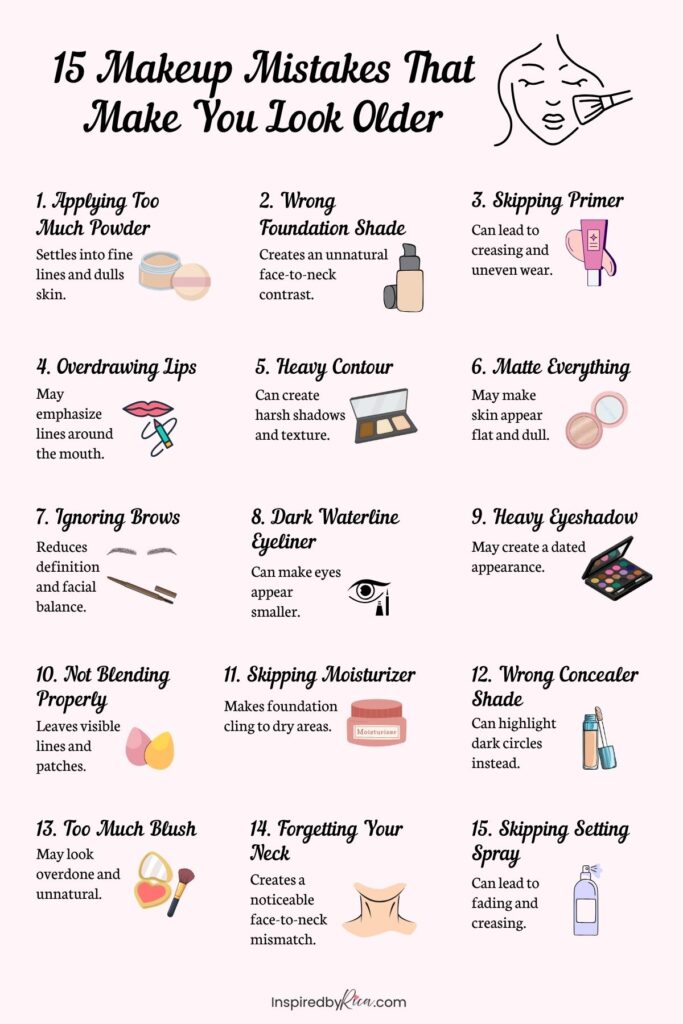
Visual Guide: 15 Makeup Mistakes That Make You Look Older (And How to Fix Them)
Frequently Asked Questions (FAQ)
What makeup mistakes make you look older?
Some of the most common makeup mistakes that can make you look older include wearing too much powder, using the wrong foundation shade, applying heavy contour, skipping moisturizer before makeup, neglecting your brows, and using dark eyeliner on the lower waterline. These techniques can emphasize fine lines, texture, and facial shadows rather than enhancing your features.
Is matte makeup aging?
Not necessarily, but using matte products on your entire face can make skin appear flatter and less radiant. A balanced approach that combines matte and hydrating products often creates a fresher, more youthful-looking finish.
Does powder make wrinkles look worse?
Applying too much powder can settle into fine lines and creases, making them appear more noticeable. Using a small amount only where needed can help control shine without emphasizing texture.
What is the best foundation for mature-looking skin?
Lightweight, hydrating, and natural-finish foundations tend to be more flattering because they provide coverage without settling heavily into fine lines. Proper skin preparation and moisturization are equally important for a smooth finish.
How can I make my makeup look more youthful?
Focus on hydration, soft blending, well-groomed brows, natural-looking blush placement, and subtle radiance. Choosing lighter textures and avoiding overly harsh lines can help create a fresher and more lifted appearance.
You May Also Like
6 Tips for Choosing the Perfect Foundation Shade
Makeup Routine for Hot Weather: 10 Tips to Prevent Smudging and Melting
18 Must-Have Makeup Essentials Every Beginner Needs
10-Step Natural Everyday Makeup Routine for a Fresh Look
Takeaways: Makeup Mistakes That Make You Look Older (And How to Fix Them)
Looking younger with makeup is often less about adding more products and more about using them strategically. Common issues such as excessive powder, harsh eyeliner, heavy contour, unblended products, and inadequate skin preparation can make fine lines, dryness, and texture appear more noticeable. Correcting these habits can instantly improve the overall appearance of your makeup.
The best makeup techniques focus on hydration, soft blending, balanced color, and enhancing your natural features rather than masking them. By avoiding these common mistakes and adopting more flattering application methods, you can create a smoother, brighter, and more youthful makeup look that complements your skin at any age.
Author’s Note:
I have a background in cosmetology and share practical, experience-based beauty and skincare tips. This content is not medical advice—please consult a licensed professional for specific concerns.