
Start working out at home with confidence—even if you’re a beginner. It can feel exciting, but also overwhelming if you don’t know where to begin. The good news is that you don’t need a fancy gym, expensive equipment, or hours of free time to get results. With the right mindset and a simple plan, you can build strength, improve your fitness, and boost your energy right in the comfort of your own home.
Working out at home is not only convenient, but it also gives you the flexibility to move at your own pace and create a routine that works for your lifestyle. Whether you want to lose weight, gain strength, or just feel healthier, this beginner’s guide will walk you through the basics so you can start strong and stay consistent.
Disclaimer: This article is for educational purposes only. Always consult with a licensed healthcare provider before beginning any new exercise program.
1. Set Realistic Goals
Before you jump into a workout, think about your “why.” Do you want to increase energy, improve strength, or simply move more during the day? Setting clear, realistic goals keeps you motivated and helps you track progress. Start small, like committing to three 20-minute workouts a week, and build from there.
2. Create a Dedicated Workout Space
You don’t need a full home gym. A small corner in your living room, bedroom, or even backyard can work perfectly. All you need is enough space to stretch, move comfortably, and place a yoga mat. Having a consistent space signals to your brain that it’s “workout time,” making it easier to build a habit.
3. Choose the Right Workouts for Beginners
Focus on simple exercises that target multiple muscle groups and don’t require equipment. Great beginner-friendly moves include:
- Bodyweight squats
- Push-ups (or knee push-ups for modification)
- Planks
- Lunges
- Glute bridges
- Jumping jacks or marching in place for cardio
Start with 15–20 minutes, combining strength and cardio for a balanced routine.
Sample 20-Minute Beginner Home Workout
No equipment needed, just a mat (optional) and some water. Do each move for 40 seconds, then rest for 20 seconds. Repeat the circuit 2 times.
- Jumping Jacks (or March in Place) – Warm up your body and get your heart rate up.
- Bodyweight Squats – Strengthen legs and core.
- Push-Ups (or Knee Push-Ups) – Work chest, arms, and shoulders.
- Glute Bridges – Activate glutes and lower back.
- Lunges (Alternating Legs) – Improve balance and leg strength.
- Plank (on elbows or hands) – Build core stability.
- Mountain Climbers (or Slow Knee Drives) – Add cardio and engage core.
Tip: If 40 seconds feels too hard at first, start with 20–30 seconds and build up over time.
4. Use Minimal Equipment (Optional)
While bodyweight workouts are enough for beginners, small, inexpensive items like resistance bands, light dumbbells, or a stability ball can add variety. If you don’t have equipment, get creative. You can use water bottles, a backpack with books, or a sturdy chair that can double as a workout tool.
5. Follow a Simple Schedule
Consistency matters more than intensity. Try this easy beginner schedule:
- Day 1: Full-body strength workout
- Day 2: Rest or light activity (like walking or stretching)
- Day 3: Cardio (jog in place, jump rope, or a quick HIIT session)
- Day 4: Rest
- Day 5: Full-body strength workout
- Day 6: Light yoga or mobility work
- Day 7: Rest or active recovery
This structure keeps your body active while allowing time for recovery.
6. Listen to Your Body
It’s normal to feel sore in the beginning, but sharp pain or extreme fatigue means you should slow down. Progress happens with consistency, not by pushing yourself to the point of injury. Modify exercises when needed and celebrate small wins along the way.
7. Stay Motivated and Accountable
Sticking to a new routine can be tough at first. Use these tips to stay motivated:
- Track your workouts in a journal or app.
- Play your favorite music or follow online workout videos.
- Ask a friend or family member to join you.
- Reward yourself for milestones (new gear, a relaxing activity, etc.).
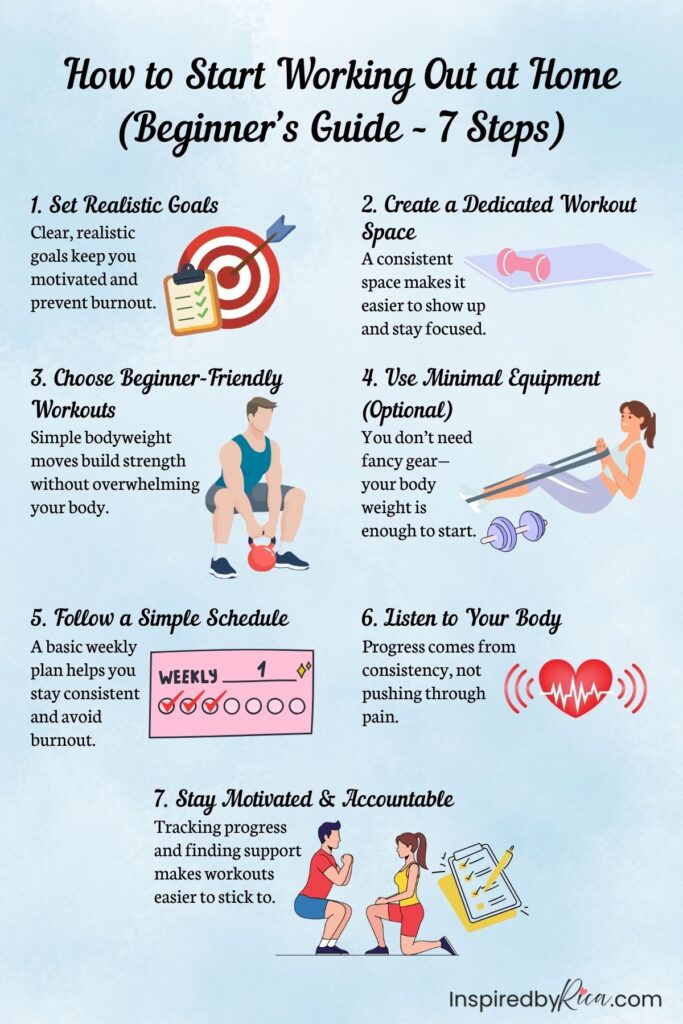
Visual Guide: How to Start Working Out at Home
You May Also Like
12 Reasons Why Walking Is One of the Best Exercises for All Ages
21 Full-Body Exercises That Build Muscle and Strength for Everyone
17 Bodyweight Exercises That Build Strength and Muscle for Beginners
13 Best Protein Sources for Muscle Growth and Faster Recovery (Complete Guide)
Takeaways: How to Start Working Out at Home
Beginning a workout routine at home doesn’t have to be complicated. By setting realistic goals, creating a space, and sticking to simple beginner-friendly exercises, you’ll build a foundation that supports long-term success. Remember, consistency matters more than perfection; every small effort counts toward your progress.
Stay patient, celebrate your wins, and enjoy the process of building strength and confidence. If you found this guide helpful, share it with your loved ones or on social media to inspire others. And don’t forget that you can revisit this article anytime you need motivation on your fitness journey.