

Finding the perfect foundation shade can feel overwhelming, but it makes a huge difference in achieving a natural, flawless makeup look. The right shade blends seamlessly with your skin. It enhances your features and avoids the dreaded ‘mask effect.’ Whether you’re new to makeup or refreshing your beauty routine, this guide will help you find the right foundation shade for your skin tone and undertone.
Disclaimer: This makeup guide is for educational purposes only. Always test products on your skin before purchasing, and consider your personal skin type and sensitivities. For professional guidance or personalized advice, consult a licensed makeup artist or dermatologist.
1. Identify Your Skin Tone
Your skin tone is the general color of your complexion. Most people fall into one of these categories:
- Fair: Light skin that may burn easily.
- Light to Medium: Beige or light tan skin tones.
- Tan to Olive: Golden or olive undertones.
- Deep: Rich brown to dark ebony tones.
Tip: Look at your bare skin in natural daylight for the most accurate read of your tone.
2. Determine Your Undertone
Undertones are the subtle colors beneath your skin’s surface. They don’t change with tanning or seasons, so understanding them is key to finding the right foundation shade.
- Cool undertones: Skin has hints of pink, red, or blue. Veins on your wrist may look blue.
- Warm undertones: Skin leans golden, peachy, or yellow. Veins may appear green.
- Neutral undertones: A balance of both cool and warm veins can look blue-green.
Tip: Jewelry test, if silver flatters you, you may be cool-toned; if gold looks better, you may be warm-toned. Neutral undertones usually suit both.
3. Swatch Before You Buy
Never rely only on the bottle color, as it can be misleading. Instead, swatch a small amount of foundation:
- Test along your jawline or neck (not your hand, which may be a different shade).
- Apply 2–3 close shades side by side.
- The right one will disappear into your skin without leaving a noticeable line.
Tip: Check the swatch in natural light to avoid mismatching with store lighting.
4. Consider Your Skin Type and Formula
Even with the right shade, foundation won’t look right if the formula doesn’t suit your skin type.
- Oily skin: Go for matte or oil-free foundations.
- Dry skin: Hydrating or dewy formulas work best.
- Combination skin: Choose lightweight, buildable coverage.
- Sensitive skin: Look for fragrance-free or dermatologist-tested options.
5. Adjust Seasonally
Your skin tone can shift slightly throughout the year. You may need:
- A lighter shade in winter.
- A slightly deeper or warmer shade in summer.
Tip: Some people mix two shades for a custom match year-round.
6. Don’t Forget Oxidation
Some foundations darken slightly after application (oxidation). Wait a few minutes after swatching to see if the color changes on your skin before making a purchase.
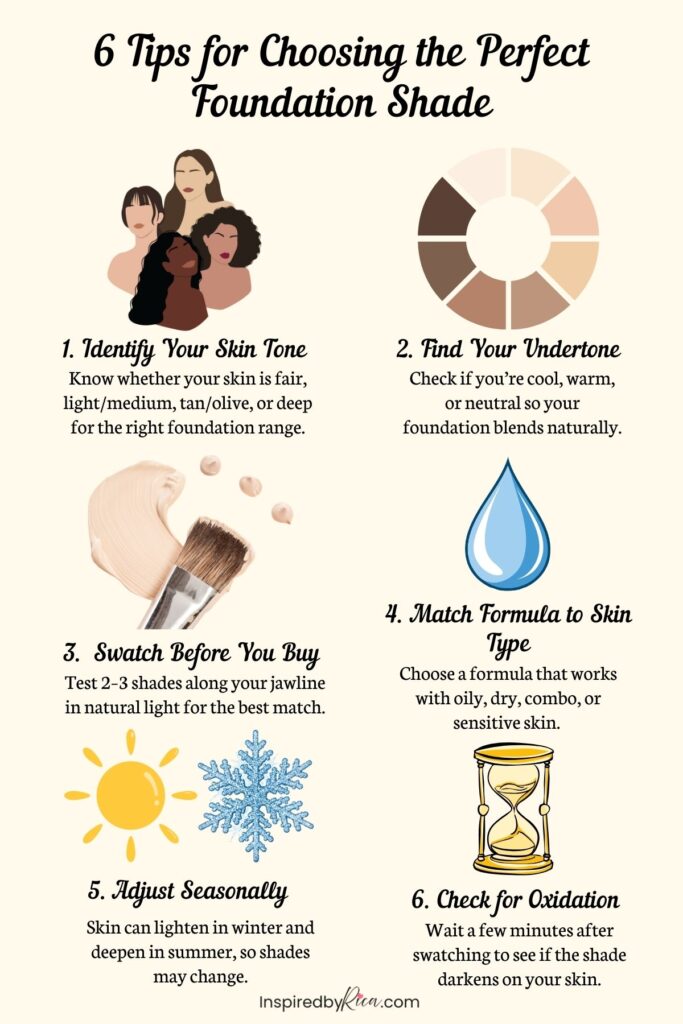
Visual Guide: How to Find Your Perfect Foundation Shade
FAQ (Frequently Asked Questions)
How do I know my exact foundation shade?
Test a few shades along your jawline and check in natural light. The right shade should blend seamlessly into your skin without leaving a visible line.
Should the foundation match my face or neck?
Your foundation should match your neck to create an even, natural-looking transition between your face and body.
Why does my foundation look darker after a few hours?
This is called oxidation. Some formulas react with air or your skin’s oils, causing them to darken slightly after application.
You May Also Like
Makeup Routine for Hot Weather: 10 Tips to Prevent Smudging and Melting
15 Makeup Mistakes That Make You Look Older (And How to Fix Them)
18 Must-Have Makeup Essentials Every Beginner Needs
10-Step Natural Everyday Makeup Routine for a Fresh Look
Takeaways: Tips for Choosing the Perfect Foundation Shade
Choosing the right foundation shade comes down to knowing your skin tone, undertone, and testing the product in natural light. Remember to consider your skin type, seasonal changes, and formula preferences. With a little testing and patience, you’ll find your perfect foundation match; one that looks natural, blends seamlessly, and enhances your beauty. Remember, makeup should feel fun and empowering, so treat foundation matching as part of the journey to discovering what makes your skin glow! Feel free to revisit this article whenever you need a reminder on choosing your foundation shade, and share it with friends, family, or on social media so they can learn how to find their perfect match, too!
Author’s Note:
I have a background in cosmetology and enjoy sharing practical, experience-based beauty and skincare tips. This content is not medical advice—please consult a licensed professional for specific concerns.